Person
Jesus of Nazareth
Jesus of Nazareth taught in first-century Galilee and Judea under Roman rule, within the scriptures, arguments, and hopes of Jewish life. The teachings attributed to him became the center of Christianity. Christian traditions confess him as the Christ—the anointed one—and, in mainstream theology, as the divine Son of God; historical inquiry asks what can be said about the Jewish teacher and the world in which he lived.
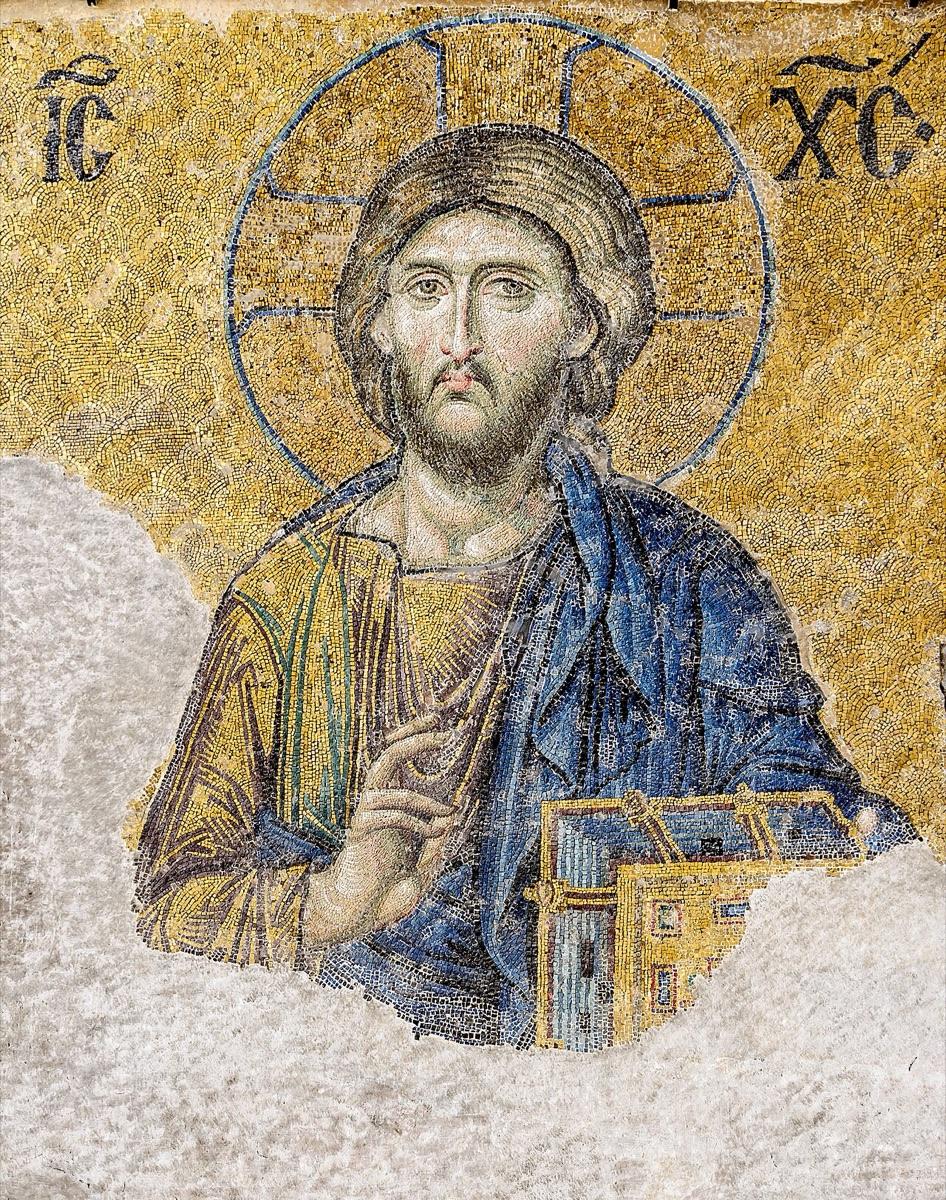
In the Gospels, Jesus repeatedly turns attention from status, possession, retaliation, and public display toward mercy, enemy-love, prayer, and care for the neighbor. The movement is not an escape from Jewish life but an argument within it about how to live before God. It also reaches beneath outward conduct to anger, desire, and the motives from which a person acts.
The Gospel of John adds another influential strand through its “I am” sayings. Christian readers have long heard those sayings beside the divine self-identification in Exodus, while later New Thought and non-dual teachers use the same words in other ways. The phrase creates a real line of comparison, but its meaning changes with the text and tradition speaking it.
Words used here
Plain meanings for words on this page.
I AM
“I AM” begins here with biblical language of divine self-identification. The Gospel of John places a series of “I am” sayings on Jesus’ lips; New Thought and non-dual teachers later use the same words for different understandings of consciousness and being. The phrase connects these pages without giving them one meaning.
Featured connections
Where Jesus of Nazareth meets other voices
Jesus of NazarethMuhammad
parallel
Jesus and Muhammad before the one God
Both are remembered as teachers who called people beyond clan loyalty and self-interest toward God, care for the vulnerable, and a morally ordered community.
Jesus and Muhammad stand at the center of traditions that join devotion to the one God with mercy, justice, and life in community. Islam honors Jesus as a prophet alongside Muhammad; Christianity centers Jesus differently, confessing him in mainstream theology as the divine Son of God.
Where they differ
Qur’an 112 says that God neither begets nor is begotten, so Islam rejects the Christian confession of Jesus as divine Son. John presents Jesus through divine Son and “I am” language, while later creeds make that confession doctrinally explicit. Muhammad remains a prophet and messenger, never an object of worship.
Jesus of NazarethPaul
later interpretation
From Jesus’ teaching to Paul’s churches
The teachings attributed to Jesus and Paul’s letters both place trust in God, mercy, love, and a transformed way of living near the center of communal life.
The movement from Jesus to Paul shows remembered teaching becoming interpretation, letters, and communities. Paul carries claims about Jesus’ death and rising into the Greek-speaking world, asking what they mean for worship, belonging, conflict, and daily life.
Where they differ
Jesus is remembered teaching through sayings, parables, and encounters within Jewish Galilee and Judea. Paul writes later as an apostle to largely Gentile communities, interpreting Jesus through death, rising, faith, and life in the church.
Jesus of NazarethJudaism
historical relationship
A Jewish teacher in a Jewish world
The Gospels place Jesus within Jewish scripture, prayer, covenant, argument, and hope. His teaching is one first-century Jewish voice within that larger world, not an external correction arriving from another religion.
Jesus’ words and disputes become clearer inside the varied Jewish world of the Second Temple period. He taught in Roman-ruled Galilee and Judea, drew on Israel’s scriptures, and spoke about the God of Israel, justice, mercy, and God’s reign from within that living inheritance.
Where they differ
The major division appears in Jesus’ later reception: mainstream Christianity confesses him as Christ and divine Son, while Judaism does not. That theological disagreement does not remove the Jewish world from which his teaching arose.
Jesus of NazarethEssenes
disputed connection
Bounded holiness beside enemy-love
Each makes holiness visible in conduct and in the kind of community that conduct creates.
The Community Rule and Matthew’s Sermon on the Mount sharpen two Jewish responses to compromised communal life: disciplined separation on one side, mercy and enemy-love on the other.
Where they differ
The Community Rule orders a ranked, purity-bound fellowship; Matthew 5–7 turns toward mercy, peacemaking, and enemy-love.
Jesus of NazarethSermon on the Mount
historical relationship
Jesus in Matthew’s hillside teaching
Matthew gathers blessings, enemy-love, prayer, judgment, treasure, and trust into a sustained hillside teaching attributed to Jesus. Christian tradition receives the passage as his Sermon on the Mount; historical study reads it through Matthew’s work as a first-century author and composer.
Continue from here
Open a related page.
Sermon on the Mount
Teaching
I AM
Idea
Judaism
Tradition
Compassion
Idea
Sources
What this reading rests on
Gospel of John
primary text
Primary Christian source for the “I am” sayings attributed to Jesus; it supports this language thread rather than serving as a neutral reconstruction of the historical Jesus.
Exodus 3 (Hebrew Bible / Old Testament)
primary text
Hebrew Bible source for divine self-identification later brought into Christian readings of John’s sayings; both translation and theological interpretation vary.