Person
Muhammad
prophet of Islam
Muhammad (c. 570–632) preached in western Arabia, where a community formed around words Muslims receive as revelation rather than as his personal philosophy. They regard him as the final prophet in a line that includes Abraham, Moses, and Jesus, and the Qur’an as God’s speech given through him. Muhammad is its messenger, never God or an object of worship.
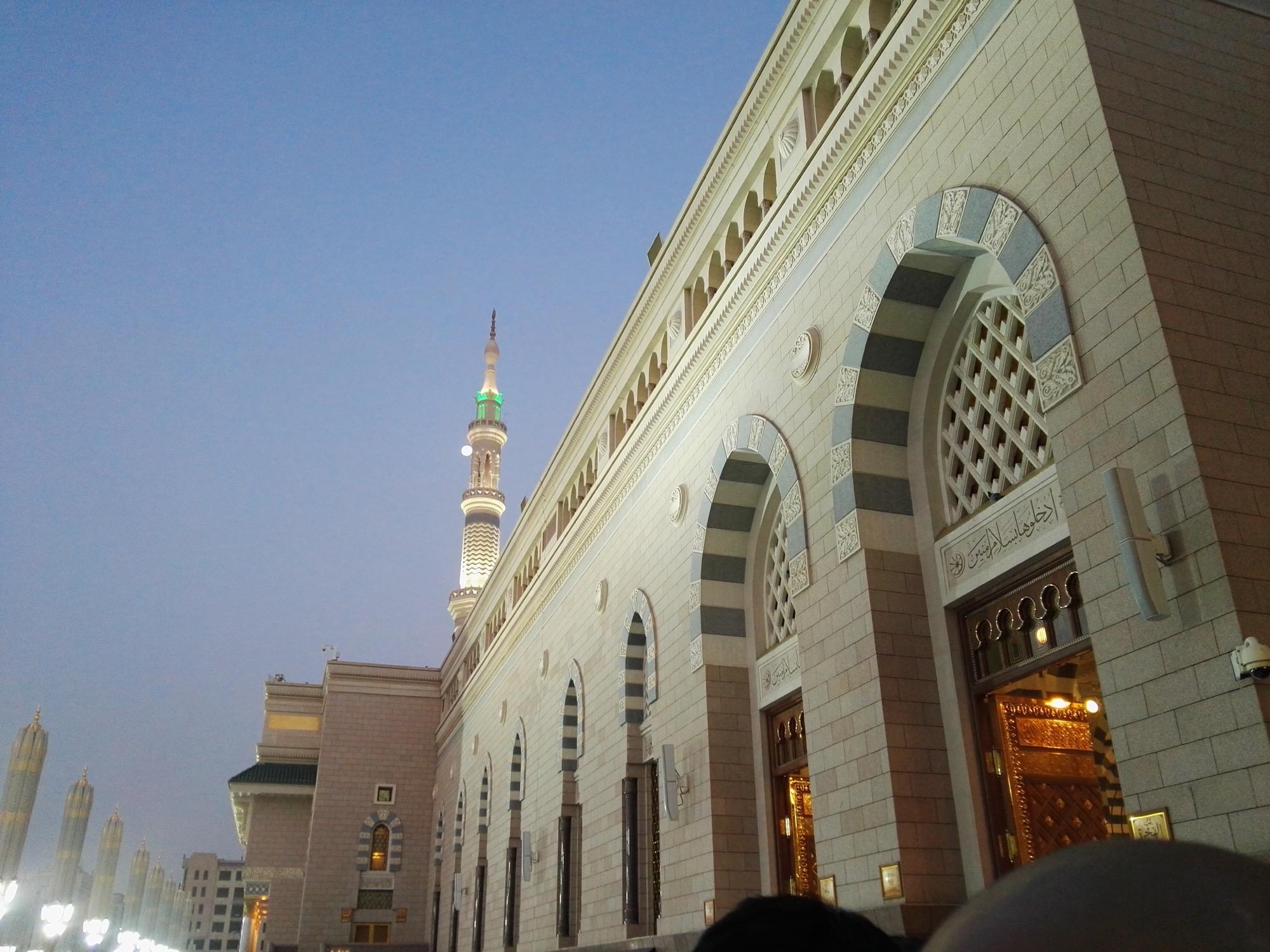
Traditional Muslim biography remembers Muhammad as al-Amīn, “the trustworthy,” and says that around 610 he began receiving revelations at Mount Hira outside Mecca. Historians draw on the Qur’an, this biographical tradition, and later sources, and they do not reconstruct every part of his life in the same way. Historically, his preaching gathered a community in Mecca and Medina around worship of one God, justice, and a fellowship wider than clan.
The movement from revelation to a way of life is central. Tawhid—the teaching that God is one, without partner, child, or equal—means that Islam honors Jesus as a prophet while rejecting the Christian confession that he is divine. Its positive center is a life ordered toward the one God: honesty, care for the orphan and traveler, prayer, and responsibility within the ummah, the community of believers. Revelation becomes communal life, carried in worship, conduct, and a fellowship wider than clan.
Words used here
Plain meanings for words on this page.
prophet
In Jewish, Christian, and Islamic settings, a prophet is a figure who speaks for God—or who bears a message that interrupts ordinary political and religious assumptions. Prophecy can include vision, poetry, warning, law, and hope.
A little deeper
“Prophet” in academic reading can also name a literary role within scripture. Strange vision can be read as history, as genre, as inner image, or as modern speculation—the text itself does not decide which reading you must take.
Islam
A monotheistic religion that began in seventh-century Arabia with the preaching of Muhammad. The Arabic word islam is often translated as surrender or submission: aligning one’s life with the one God. It is not one identical culture, and Muslims disagree about law, theology, and practice.
Qur’an
The sacred scripture of Islam. In Muslim belief it is God’s speech revealed in Arabic through Muhammad—not Muhammad’s personal philosophy. Historians study how the text was recited, written, and compiled in the seventh century and after.
revelation
Knowledge a religious tradition understands as disclosed or given rather than reached by human reasoning alone—for example through divine speech, scripture, prophecy, vision, or inner illumination.
A little deeper
A claimed revelation is received and interpreted within a community: texts are preserved, visions are tested, and meanings are argued. Reason, tradition, and experience may all take part, while communities continue to disagree about what counts as revelation and what authority it carries.
Featured connections
Where Muhammad meets other voices
MuhammadJesus of Nazareth
parallel
Jesus and Muhammad before the one God
Both are remembered as teachers who called people beyond clan loyalty and self-interest toward God, care for the vulnerable, and a morally ordered community.
Jesus and Muhammad stand at the center of traditions that join devotion to the one God with mercy, justice, and life in community. Islam honors Jesus as a prophet alongside Muhammad; Christianity centers Jesus differently, confessing him in mainstream theology as the divine Son of God.
Where they differ
Qur’an 112 says that God neither begets nor is begotten, so Islam rejects the Christian confession of Jesus as divine Son. John presents Jesus through divine Son and “I am” language, while later creeds make that confession doctrinally explicit. Muhammad remains a prophet and messenger, never an object of worship.
MuhammadIslam
historical relationship
A prophetic message becomes a community
Muhammad’s preaching and the emerging Muslim community are joined by the Qur’an, worship of the one God, and responsibilities extending beyond clan.
Muslims understand Muhammad as the prophet through whom the Qur’an was revealed. Historically, his preaching in seventh-century Mecca and Medina gathered a community whose worship, conduct, and shared life became the beginning of Islam.
Where they differ
Islam is the living tradition that developed across many cultures, schools, and centuries; Muhammad is its founding prophet and messenger, never its God.
MuhammadAl-Ikhlas
historical relationship
Messenger and the teaching of oneness
Muhammad’s prophetic message and Al-Ikhlas share the same center: worship belongs to the one incomparable God.
Muslims receive Al-Ikhlas as part of the Qur’an revealed through Muhammad. In four verses it concentrates tawhid, the teaching that God is one, self-sufficient, without begetting or origin, and beyond comparison.
Where they differ
Muhammad is the human messenger in Islamic tradition; Al-Ikhlas is a chapter of the revelation he is believed to have received.
MuhammadBahá'u'lláh
contrast
Two messengers in an Abrahamic history
In each community, a messenger’s revelation shapes worship, conduct, scripture, and common life.
Muhammad and Bahá'u'lláh stand within an Abrahamic pattern of one God, revelation, scripture, and communities shaped by a messenger’s words. Bahá'í teaching honors both within one unfolding history.
Where they differ
Islam regards Muhammad as the Seal of the Prophets, whereas Bahá'í progressive revelation recognizes Bahá'u'lláh as a further messenger.
Continue from here
Open a related page.
Al-Ikhlas
Teaching
Islam
Tradition
Revelation
Idea
Jesus of Nazareth
Person
Sources
What this reading rests on
Muhammad – Encyclopaedia Britannica
encyclopedia
Secondary historical orientation for Muhammad’s life, preaching in Mecca and Medina, and the formation of the early Muslim community.
Qur’an 112 (Surah al-Ikhlas)
primary text
A primary Qur’anic expression of tawhid, the oneness of God at the center of the message Muslims receive through Muhammad.