Tradition
Judaism
Judaism is the living religious tradition of the Jewish people, rooted in ancient Israel and carried through scripture, prayer, study, law, memory, and communal life. Covenant is one central scriptural and religious vocabulary for this life: a relationship in which the God of Israel calls a people, and that people answers across generations. The answers have never formed a single uniform voice. Jewish life has grown through interpretation and argument as well as worship and practice.
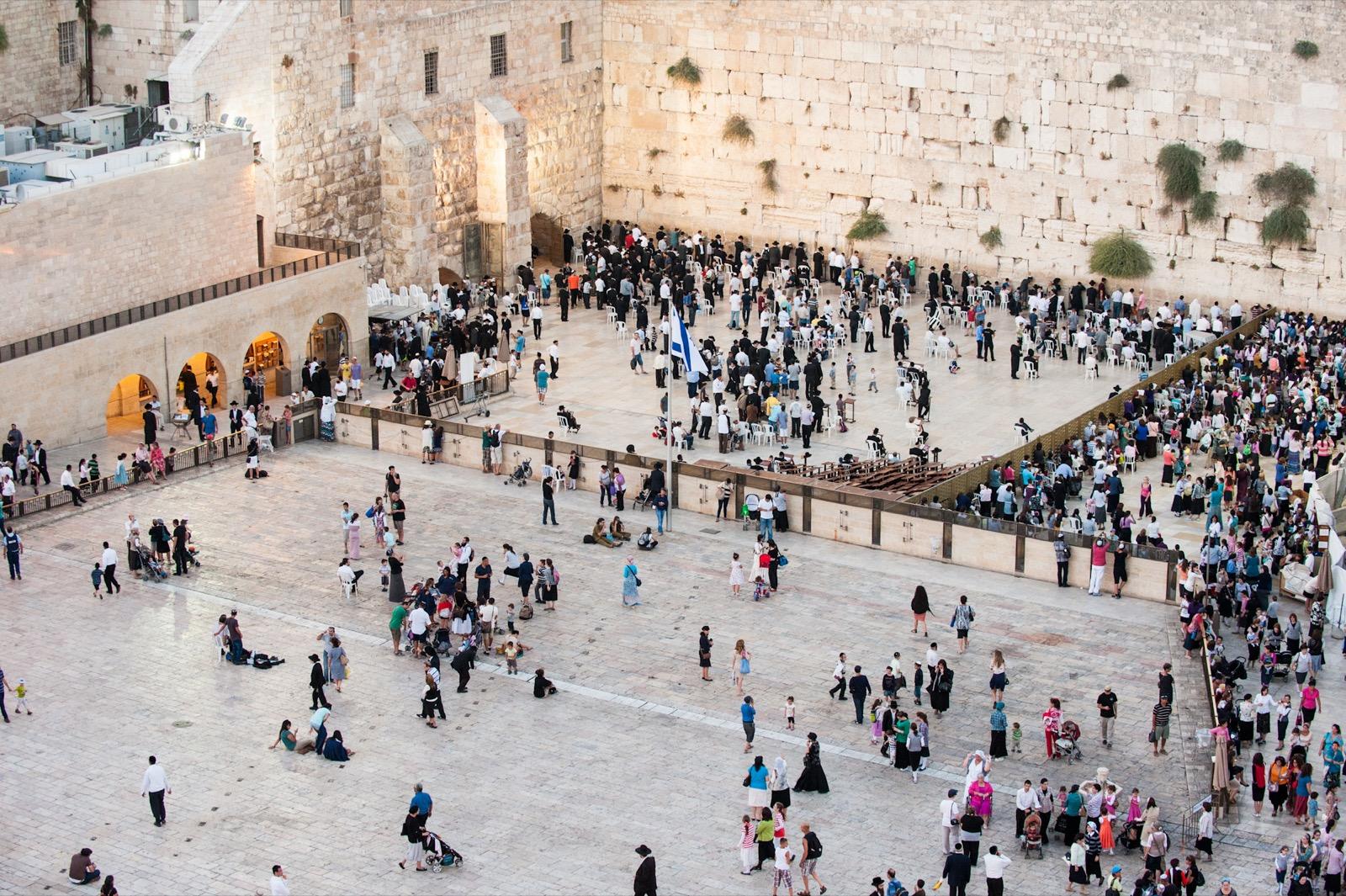
Torah means first the Five Books of Moses and, more broadly in Jewish life, the teaching and instruction that flow from them. It is read aloud, studied closely, debated, and brought into the ordinary demands of justice, worship, food, rest, family, and community. The Shema, named for the Hebrew word meaning “Hear,” gathers this life around the oneness of God and the call to love God with heart, soul, and strength. Oneness here is not only an abstract statement about how many gods exist. It places the whole of life in relation to the one God of covenant.
That relation has taken many historical forms. In the Second Temple period, when the Jerusalem temple stood until its destruction by Rome in 70 CE, Jewish life included priests, Pharisees, Sadducees, apocalyptic writers, rebels, and communities devoted to distinctive forms of purity and discipline. Rabbinic Judaism developed through and after that upheaval, carrying Torah into new patterns of prayer, law, commentary, and communal practice; it should not be projected backward as the period’s only form. Medieval philosophy, Kabbalah, and modern Jewish movements opened further paths. This long, internally diverse history is also the world from which Jesus, Christianity, the writings associated with Enoch, and later readings of the divine name emerged. Those later paths become clearer when the Jewish sources speak first in their own setting.
Words used here
Plain meanings for words on this page.
Judaism
The religion and people of Israel: a living family of covenant, Torah, worship, and argument that grew in the ancient Near East and continues worldwide. It has no single creed all Jews must recite, and Jews disagree about law, God, and practice.
Torah
In Jewish life, Torah often means the Five Books of Moses—Genesis through Deuteronomy—and, more broadly, the teaching and instruction that those books begin. It is studied, argued over, and lived; it is not only a museum text.
A little deeper
Later Jewish tradition also speaks of Oral Torah: teaching carried in discussion, law, and commentary beside the written books. Christians later received much of this library as the Old Testament. That later Christian name is not how Jewish communities name their own scripture.
covenant
A binding relationship, often pictured as a solemn agreement, between God and a people. In Jewish scripture, covenant names God’s commitment to Abraham’s descendants and Israel’s answering life of loyalty, justice, and remembrance.
Second Temple Judaism
Jewish life in the centuries after the Babylonian exile, when a rebuilt temple stood in Jerusalem, until that temple was destroyed by Rome in 70 CE. Jesus, the Pharisees, the Sadducees, and the community behind many Dead Sea Scrolls belong in this wide landscape—not in later rabbinic Judaism as if it were already the only form.
Featured connections
Where Judaism meets other voices
JudaismJesus of Nazareth
historical relationship
A Jewish teacher in a Jewish world
The Gospels place Jesus within Jewish scripture, prayer, covenant, argument, and hope. His teaching is one first-century Jewish voice within that larger world, not an external correction arriving from another religion.
Jesus’ words and disputes become clearer inside the varied Jewish world of the Second Temple period. He taught in Roman-ruled Galilee and Judea, drew on Israel’s scriptures, and spoke about the God of Israel, justice, mercy, and God’s reign from within that living inheritance.
Where they differ
The major division appears in Jesus’ later reception: mainstream Christianity confesses him as Christ and divine Son, while Judaism does not. That theological disagreement does not remove the Jewish world from which his teaching arose.
JudaismKabbalah
historical relationship
A Jewish mystical stream
Kabbalah and wider Jewish life share scripture, prayer, covenant, and devotion to the God of Israel.
Kabbalah developed within Jewish life, drawing Torah, prayer, commandment, and the God of Israel into sustained reflection on how the infinite becomes present in creation. It is one important current within a much wider and internally diverse tradition.
Where they differ
Jewish life does not depend on the sefirot or Kabbalistic accounts of emanation. Kabbalah develops a particular mystical vocabulary within Judaism rather than defining the tradition as a whole.
JudaismChristianity
historical relationship
A Jewish inheritance, two living traditions
Both turn to Israel’s scriptures and speak of the one God, covenant, justice, mercy, prayer, and communal faithfulness.
Christianity began among Jewish followers of Jesus and carried Israel’s scriptures into communities that soon included many Gentiles. Reading the traditions together reveals a shared inheritance and the historical development of a distinct Christian faith.
Where they differ
Christianity centers Jesus as Christ and, in mainstream theology, as the divine Son; Judaism does not share that confession and receives its scriptural library as the Tanakh rather than as a Christian Old Testament.
JudaismIslam
historical relationship
Abrahamic kinship through the one God
The Shema and Islamic tawhid both confess divine oneness and place the whole of life—prayer, conduct, and community—in relation to God.
Judaism and Islam both orient worship, law, and communal life toward the one God and remember figures including Abraham and Moses. The Shema and Qur’an 112 make this shared Abrahamic pattern especially clear from within each tradition’s own scripture.
Where they differ
Islam receives the Qur’an as revelation through Muhammad and honors Jesus as a prophet, while Judaism receives neither Muhammad as a prophet nor the Qur’an as Jewish scripture.
JudaismGod
shared concept
God encountered through covenant
Judaism shares with other God-centered traditions the movement of placing worship, moral responsibility, gratitude, and lament in relation to what is ultimate.
Jewish scripture speaks of the one God through covenant and address: God calls, commands, loves, hears, and binds a people to a life of faithfulness. This gives the wider question of God one of its most influential relational forms.
Where they differ
Its covenant language belongs to Israel’s particular scriptural history; later Christian, Islamic, philosophical, and non-dual accounts develop different claims about God and ultimate reality.
Continue from here
Open a related page.
Jesus of Nazareth
Person
God
Idea
I AM
Idea
Book of Enoch
Teaching
Sources
What this reading rests on
Judaism – Encyclopaedia Britannica
encyclopedia
Secondary orientation for Judaism’s historical development and continuing diversity across belief, practice, and community.
Deuteronomy 6:4–5 (the Shema)
primary text
The Shema’s primary scriptural expression of the Lord’s oneness and Israel’s call to love God with the whole of life.
Exodus 3 (Hebrew Bible / Old Testament)
primary text
The Hebrew Bible setting for divine self-naming within Israel’s story, before later Christian, philosophical, and mystical readings of its language.