Teaching
Sermon on the Mount
Blessing, enemy-love, and life before God
A crowd gathers on a hillside, and Matthew’s Jesus begins by blessing people ordinary measures of success might pass over: the poor in spirit, those who mourn, the merciful, and the peacemakers. From that opening, the Sermon on the Mount asks what life before God looks like when status, retaliation, and public display no longer set its center.
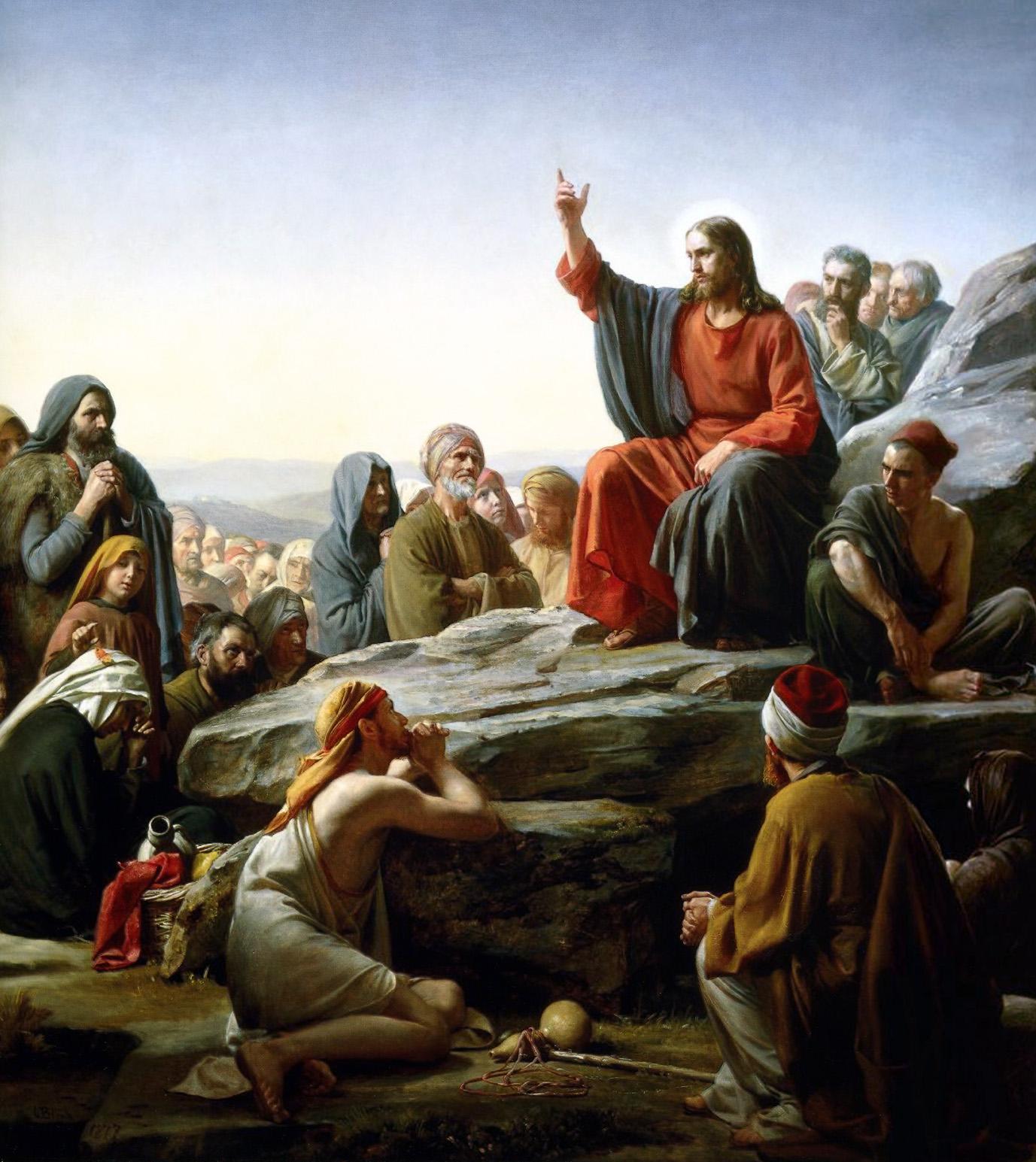
The Beatitudes give mourning, mercy, hunger for righteousness, and peacemaking a dignity that power rarely grants them. The teaching then presses beyond visible obedience toward the intention from which action grows: anger is placed beside murder, lust beside adultery, and reconciliation before religious display. Its most demanding turn reaches toward the enemy, refusing to let love stop at the boundary of friendship or retaliation decide how one answers harm.
Prayer follows the same inward movement. Jesus warns against praying for an audience, then offers the short address later called the Lord’s Prayer: daily bread, forgiveness, and rescue from trial are asked of a Father in heaven. Treasure, judgment, and anxiety are also drawn into this life before God, where what is hidden in motive matters alongside what others can see.
Christianity emerged within this Jewish world, and Matthew’s discourse remains rooted in arguments about Torah, God, righteousness, and neighbor under Roman rule. Matthew’s first-century Gospel is a composed narrative, not a stenographic transcript of one hillside afternoon, even as Christian tradition receives the discourse as Jesus’ teaching. Placed beside other paths, its deepest movement is ethical and relational: outward conduct is traced inward to intention, then carried back into prayer, mercy, peacemaking, and love of enemy.
Words used here
Plain meanings for words on this page.
Beatitudes
The opening blessings of the Sermon on the Mount in the Gospel of Matthew: words that praise the poor in spirit, those who mourn, the merciful, the peacemakers, and others whom ordinary status often overlooks.
agape
A Greek word used in early Christian texts for self-giving love—charity, goodwill, willing another's good even at cost to oneself. It names a quality of love that can include cost, beyond romantic desire or warm feeling alone.
A little deeper
Agape names a quality of love praised in passages such as 1 Corinthians 13: patient, not envious, not self-seeking. Christian tradition often contrasts it with possessive or merely sentimental forms of love.
Featured connections
Where Sermon on the Mount meets other voices
Sermon on the MountFour Noble Truths
parallel
Two paths that begin near human suffering
Both join an account of human difficulty to practical formation: the Buddhist teaching sets out the Eightfold Path in response to dukkha and craving, while Matthew calls hearers into mercy, reconciliation, prayer, non-retaliation, and trust in God.
The Sermon on the Mount addresses people amid poverty, conflict, anxiety, and unequal power through blessing, righteousness, mercy, prayer, and trust in God. The Four Noble Truths identify dukkha, its arising through craving, its cessation, and the path. In their own categories, each moves from naming a human predicament to a way of life that can be practiced.
Where they differ
The Four Noble Truths diagnose craving and open a path toward cessation without a Creator-God frame, while the Sermon speaks of mercy, righteousness, and God’s reign within Jewish scripture and relation to God and neighbor.
Sermon on the MountJesus of Nazareth
historical relationship
Jesus in Matthew’s hillside teaching
Matthew gathers blessings, enemy-love, prayer, judgment, treasure, and trust into a sustained hillside teaching attributed to Jesus. Christian tradition receives the passage as his Sermon on the Mount; historical study reads it through Matthew’s work as a first-century author and composer.
Sermon on the MountBhagavad Gita
contrast
Two ways of acting when conflict closes in
Both trace outward action back to inward attachment and motive, asking for a life no longer governed by fear, reward, reputation, or retaliation.
The Gita and the Sermon on the Mount both ask what freedom from fear, status, and self-protection would look like in action. One speaks to a warrior unable to fight; the other presses love beyond friend and kin toward the enemy. Their proximity makes moral formation visible precisely where their counsel separates.
Where they differ
The Gita can require battle as Arjuna’s dharma within an epic crisis of kinship and order; Matthew’s Jesus resists retaliation, blesses peacemakers, and commands love of enemies before God.
Sermon on the Mount1 Corinthians 13
later interpretation
Enemy-love beside patient agape
Both make love visible in conduct that resists retaliation, self-seeking, and performance, extending care beyond the circle of those who can return it.
The Sermon’s call to love enemies and Paul’s description of agape both move love beyond preference, reciprocity, and public display. Christian readers have long heard these voices together because each asks for a form of care not governed by status or self-interest. The connection belongs within the developing Christian tradition rather than to a single speaker or occasion.
Where they differ
Matthew presents a Gospel discourse attributed to Jesus within a Jewish setting, while 1 Corinthians 13 is Paul’s later counsel to a conflicted Gentile church about spiritual gifts and common life.
Sermon on the MountCompassion
shared concept
Mourning answered by mercy
The Beatitudes place mourners and the merciful among those called blessed, giving pain and compassionate response a dignity ordinary measures of success can miss. Compassion here takes the form of mercy within Jesus’ Jewish teaching about righteousness, God, and neighbor.
Continue from here
Open a related page.
Jesus of Nazareth
Person
Compassion
Idea
Ethics
Idea
Prayer
Idea
Sources
What this reading rests on
Matthew 5–7 (Sermon on the Mount)
primary text
Matthew 5–7 presents the Beatitudes, enemy-love, prayer, inner intention, judgment, and life before God as a connected discourse of Jesus.
Matthew 5 (Sermon on the Mount excerpts)
primary text
Matthew 5 contains the Beatitudes and the teaching on anger, desire, reconciliation, retaliation, and love of enemies.