Tradition
Essenes
A Second Temple Jewish sect
The Essenes were one Jewish response to a difficult question in the Second Temple period: how can a community live faithfully when the wider world feels compromised? First-century writers describe groups marked by shared discipline, ritual purity, communal property, and carefully ordered life. Some accounts emphasize celibate communities, while other related evidence allows for families. The picture is not uniform, but its center is clear: holiness was pursued together, through a demanding way of life.
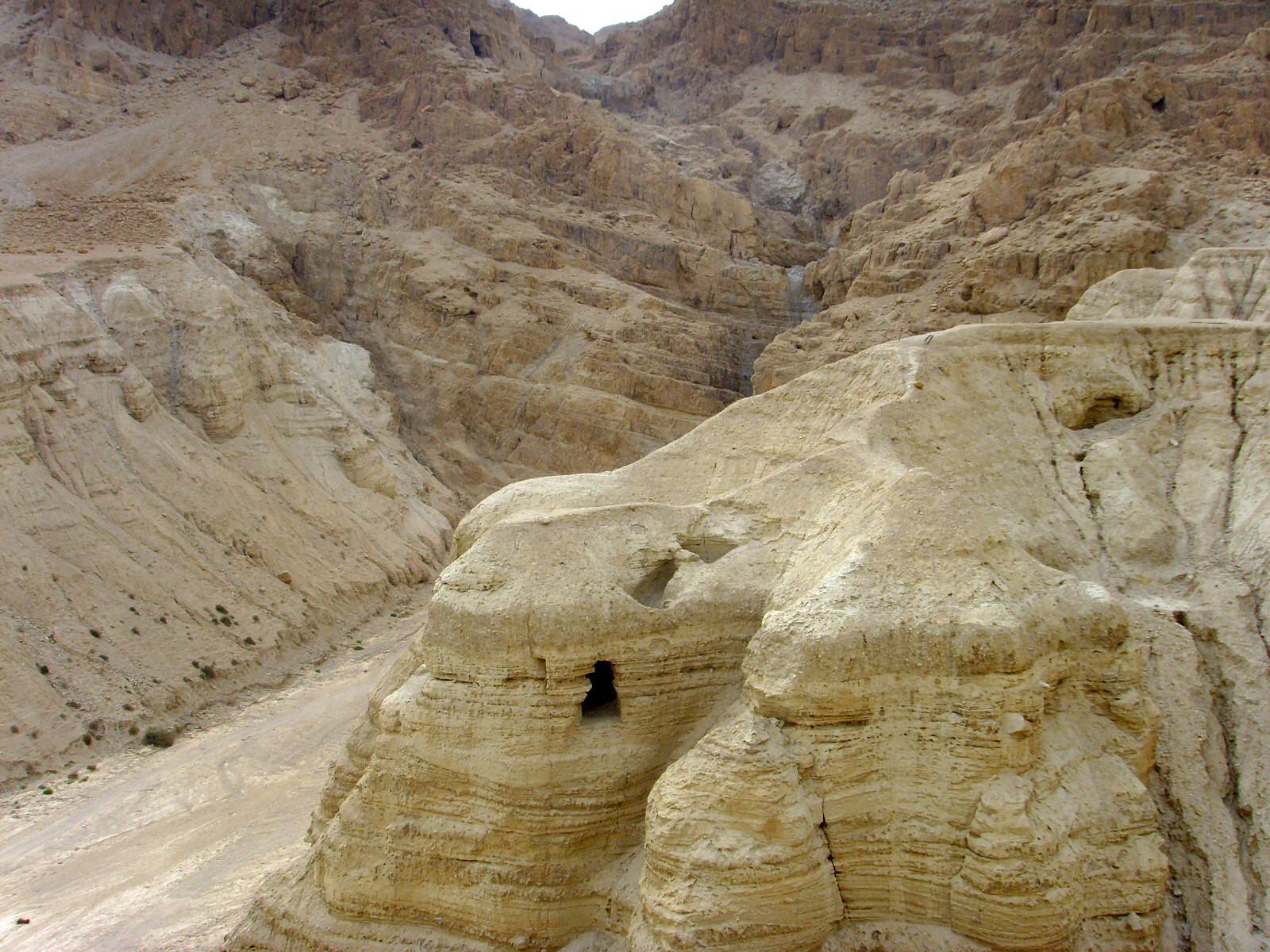
Josephus, writing in Greek for readers in the Roman world, places the Essenes beside Pharisees and Sadducees as distinct currents within Jewish life. The Dead Sea Scrolls offer a possible inner voice: texts from caves near Qumran speak of a Yahad, meaning the Community, whose members were ranked, examined, instructed, and divided symbolically between the lot of light and the lot of darkness. Many scholars identify this community with the Essenes or a closely related group because the patterns of purity and communal discipline fit, though the manuscripts never use the Greek name “Essene” and the identification remains disputed.
Read on its own terms, the Community Rule describes an austere, bounded community. Its washings, shared meals, calendar, scriptural interpretation, and ranks shaped a collective life ordered around covenant faithfulness, purity, and readiness for God’s judgment. This creates a vivid meeting point with John the Baptist and Jesus in a shared first-century landscape of wilderness, immersion, moral urgency, and lives made ready for God. The contrast is equally revealing: the Yahad sought holiness through disciplined separation, while the Gospels often place Jesus at table with people kept beyond ordinary boundaries of purity and status. The surviving evidence places these movements beside one another without establishing that either John or Jesus belonged to an Essene community.
Words used here
Plain meanings for words on this page.
Essenes
A Jewish sect described by the first-century writers Josephus, Philo, and Pliny: communal, concerned with purity, often pictured as sharing property and practicing ritual washing. The Dead Sea Scrolls never use that Greek name. Most scholars identify the Qumran community with Essenes or a related group; some do not. The identification is a majority view, not a caption the jars provide.
Yahad
A Hebrew word used in some Dead Sea Scrolls for the community itself—often translated “unity” or “the Community.” It is a self-name in the texts, not the later Greek label “Essenes.”
Second Temple Judaism
Jewish life in the centuries after the Babylonian exile, when a rebuilt temple stood in Jerusalem, until that temple was destroyed by Rome in 70 CE. Jesus, the Pharisees, the Sadducees, and the community behind many Dead Sea Scrolls belong in this wide landscape—not in later rabbinic Judaism as if it were already the only form.
Featured connections
Where Essenes meets other voices
EssenesDead Sea Scrolls
possible connection
The Yahad and the Essenes
The Community Rule and Josephus both describe a demanding Jewish communal life shaped by purity practices, shared discipline, and clear boundaries of membership.
The disciplined community described in the Dead Sea Scrolls closely resembles the Essenes known through ancient writers: both organize life around shared practice, purity, and ordered belonging. Most scholars therefore identify the Qumran community with the Essenes or a related group, although the Scrolls call the community the Yahad and never use the name “Essene.”
Where they differ
Yahad is the community’s self-name in the Scrolls, while Essenes is the name used by outside Greek-language writers; the identification is a strong scholarly interpretation, not an explicit statement in the manuscripts.
EssenesJesus of Nazareth
disputed connection
Bounded holiness beside enemy-love
Each makes holiness visible in conduct and in the kind of community that conduct creates.
The Community Rule and Matthew’s Sermon on the Mount sharpen two Jewish responses to compromised communal life: disciplined separation on one side, mercy and enemy-love on the other.
Where they differ
The Community Rule orders a ranked, purity-bound fellowship; Matthew 5–7 turns toward mercy, peacemaking, and enemy-love.
EssenesJohn the Baptist
possible connection
One immersion beside a rule of purity
Wilderness, water, and approaching judgment give the two movements a recognizable historical meeting point.
John’s wilderness immersion and Essene-related washings belong to the same landscape of urgent Jewish preparation for judgment. Their different uses of water make contact possible to consider without turning resemblance into a membership record.
Where they differ
Mark presents a prophetic call and an immersion of repentance; the Community Rule orders repeated purity within a ranked fellowship, and no surviving source enrolls John in it.
Continue from here
Open a related page.
Dead Sea Scrolls
Teaching
John the Baptist
Person
Jesus of Nazareth
Person
Sources
What this reading rests on
Josephus on the Essenes
original work
A primary ancient description that names the Essenes among Jewish groups and portrays their communal discipline, property arrangements, purity practices, and internal diversity.
Community Rule (1QS)
primary text
The Qumran community’s own rule for ranked membership, shared discipline, ritual purity, and the divided language of light and darkness; its Essene relationship remains an interpretation.
Essene – Encyclopaedia Britannica
encyclopedia
Secondary orientation for ancient descriptions of the Essenes and the scholarly debate over identifying them with the Qumran community.