Person
Siddhartha Gautama
the Buddha
Siddhartha Gautama lived in northern India around the fifth century BCE—exact dates remain debated—and became known as the Buddha, meaning “the awakened one.” His teaching centered on a practical question: why does suffering arise, and can the conditions that sustain it come to an end?
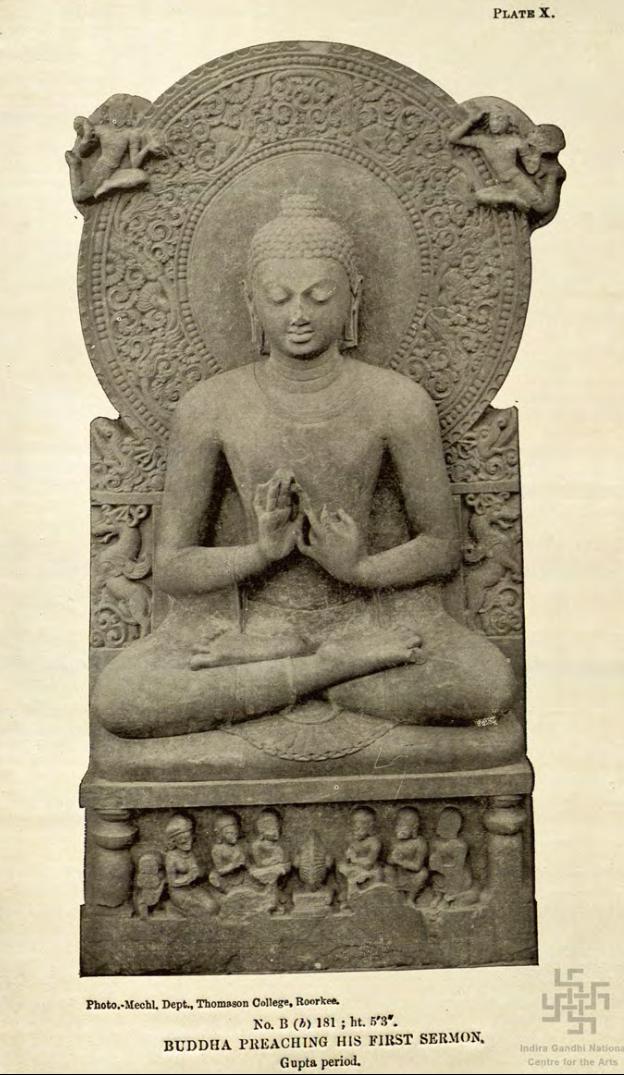
Early Buddhist teaching turns attention toward experience itself. Body, feeling, perception, mental formations, and consciousness—the five aggregates—are examined as changing and not fully under command. The teaching of anatta, or not-self, asks whether any of them can rightly be claimed as a permanent self. This inquiry belongs within a wider account of suffering, craving, release, and the path of practice.
Later Buddhist schools carried these teachings in diverse directions—monastic and lay, philosophical and devotional, across Asia and eventually worldwide. Their accounts of mind and awakening are not identical, but questions of impermanence, clinging, and liberation continue to run through the tradition.
Words used here
Plain meanings for words on this page.
anatta
A Buddhist teaching usually translated as “not-self.” It asks whether any permanent, independent owner of experience can be found among the changing processes we ordinarily call “me.” It is not a claim that a person simply does not exist.
A little deeper
In the early discourse used here, body, feeling, perception, mental formations, and consciousness are examined as changing, vulnerable to suffering, and not fully subject to command. The listener is therefore taught not to hold any of them as mine, I, or self. Later Buddhist traditions develop this teaching in different ways.
Featured connections
Where Siddhartha Gautama meets other voices
Siddhartha GautamaRamana Maharshi
parallel
The inquiry before the answer
Ordinary identity becomes a question rather than the starting assumption.
The comparison is strongest in the act of inquiry: each interrupts the reflex to accept the familiar “I” without examination, then follows that interruption in a different direction.
Where they differ
Their answers are not interchangeable: early Buddhism releases every aggregate from the claim of permanent self, while Ramana’s Advaita turns toward the deepest Self as ultimate reality.
Siddhartha GautamaNot-self
shared concept
Not-self as a practice of release
In an early discourse, the Buddha applies the same practical test to each aggregate: seeing its instability loosens the habit of claiming it as mine, I, or self.
Siddhartha GautamaFour Noble Truths
historical relationship
The teaching remembered as first
In Buddhist tradition, the discourse at Sarnath marks the Buddha’s first teaching after awakening. It sets suffering, craving, cessation, and the path at the center of the work of liberation.
Siddhartha GautamaThought
shared concept
When a thought becomes “mine”
Both begin from the recognizable experience that thought can feel inseparable from identity.
Thoughts and mental formations are among the changing processes early Buddhist teaching asks us to examine. The important turn is not simply that a thought appears, but that it is claimed as mine or taken to reveal a permanent thinker.
Where they differ
Noticing thought is only the doorway. Buddhist not-self examines the wider field of body and mind and asks whether any changing aggregate can rightly be held as a permanent self.
Siddhartha GautamaJesus of Nazareth
parallel
When grasping stops organizing life
Buddhist teaching connects release with understanding and relinquishing craving and clinging; Jesus’ teachings loosen the rule of possessions, refuse retaliation, and order life toward love of God and neighbor.
Early Buddhist teaching traces suffering through craving and clinging. Teachings attributed to Jesus turn life away from self-protection toward love of God and others. Both ask what changes when grasping no longer sets the terms of life.
Where they differ
The parallel concerns grasping, not a shared account of selfhood. Buddhism develops anatta within an analysis of suffering and the aggregates; Jesus speaks within a Jewish world of God, neighbor, mercy, and faithfulness.
Continue from here
Open a related page.
Four Noble Truths
Teaching
Not-self
Idea
Craving
Idea
Suffering
Idea
Sources
What this reading rests on
Buddha
encyclopedia
Secondary orientation for the Buddha’s historical setting and the continuing debate over his dates.
Dhammapada
primary text
Early Buddhist verses on conduct, mental training, craving, and release; useful for the teaching’s practical orientation.
Anattalakkhana Sutta (SN 22.59)
primary text
Early discourse applying not-self analysis to body, feeling, perception, mental formations, and consciousness.