Tradition
Christianity
and the teachings of Jesus
Christianity grew from communities gathered around the life, death, and remembered teachings of Jesus of Nazareth, a first-century Jewish teacher. Christians confess Jesus as the Christ—the anointed one—and, in mainstream theology, as the divine Son of God. From those beginnings came a worldwide family of churches whose scriptures, worship, theology, and ways of life have never spoken with only one voice.
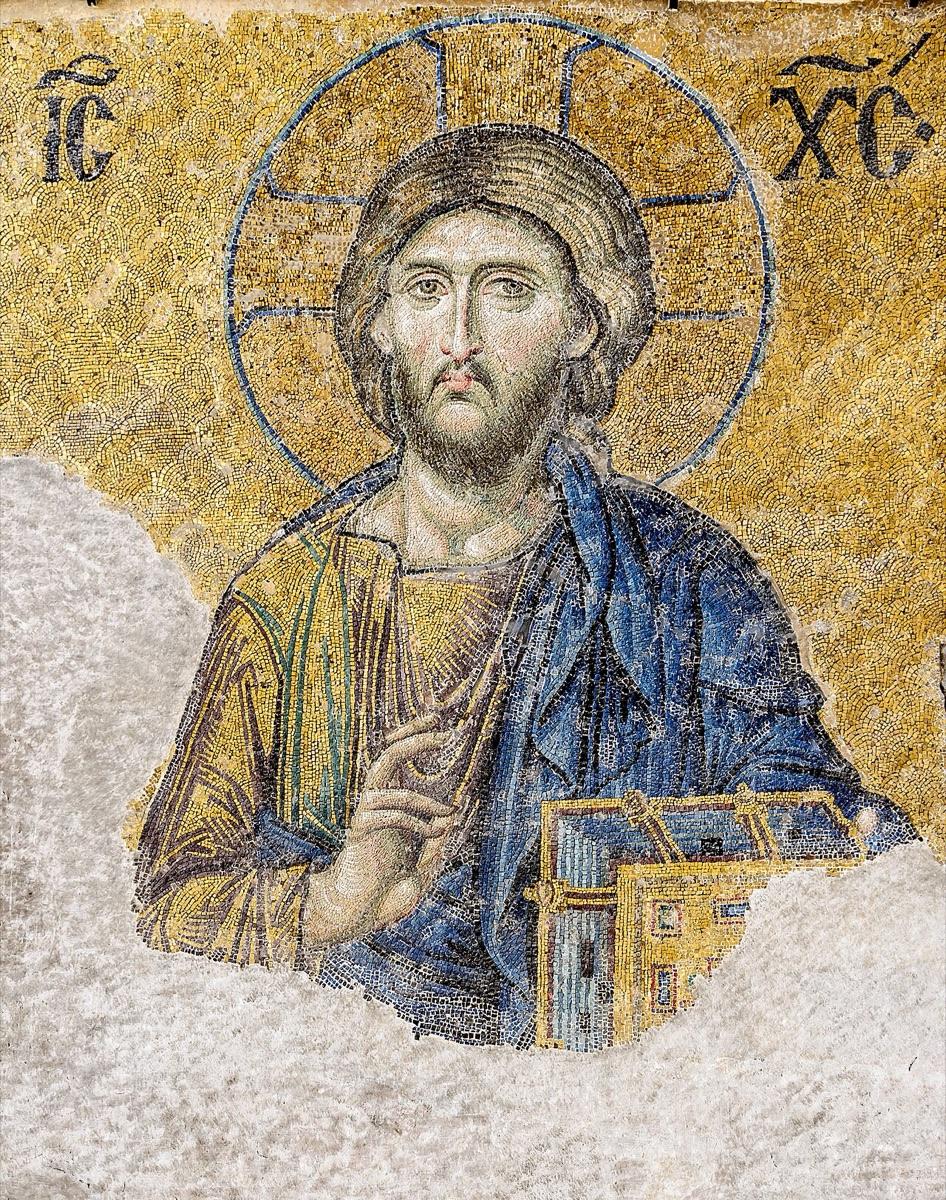
The teachings attributed to Jesus arise within Jewish scripture, prayer, and argument about how to live before God. In the Gospels, they turn repeatedly toward mercy, enemy-love, care for the neighbor, prayer, and the motives beneath outward conduct. Later churches received these teachings alongside accounts of Jesus' death and resurrection, apostolic letters, worship, and developing doctrine. Historical study of Jesus, Christian confession about him, and the history of church institutions belong to the same unfolding story, but they ask different questions of it.
One line through that story follows divine self-identification. Exodus includes words often rendered “I AM WHO I AM,” and the Gospel of John places a series of “I am” sayings on Jesus' lips; Christian readers have long interpreted the two together. Another line reaches medieval figures such as Meister Eckhart, whose language of the Godhead presses toward the limits of ordinary God-language while remaining rooted in Christian speech of Trinity, the Word, prayer, and grace. These strands show Christianity's range without turning any one mystical, doctrinal, or historical reading into the whole tradition.
Words used here
Plain meanings for words on this page.
I AM
“I AM” begins here with biblical language of divine self-identification. The Gospel of John places a series of “I am” sayings on Jesus’ lips; New Thought and non-dual teachers later use the same words for different understandings of consciousness and being. The phrase connects these pages without giving them one meaning.
Featured connections
Where Christianity meets other voices
ChristianityJudaism
historical relationship
A Jewish inheritance, two living traditions
Both turn to Israel’s scriptures and speak of the one God, covenant, justice, mercy, prayer, and communal faithfulness.
Christianity began among Jewish followers of Jesus and carried Israel’s scriptures into communities that soon included many Gentiles. Reading the traditions together reveals a shared inheritance and the historical development of a distinct Christian faith.
Where they differ
Christianity centers Jesus as Christ and, in mainstream theology, as the divine Son; Judaism does not share that confession and receives its scriptural library as the Tanakh rather than as a Christian Old Testament.
ChristianityMeister Eckhart
historical relationship
Christian preaching at language’s edge
Eckhart’s most daring language arose from his work as a Dominican theologian and preacher. His teaching on detachment, Godhead, and the Word born in the soul stretches Christian speech from within its scriptures, sacraments, Trinity, and prayer; the later condemnation belongs to that same ecclesial history.
Continue from here
Open a related page.
Jesus of Nazareth
Person
Judaism
Tradition
Sermon on the Mount
Teaching
Paul
Person
Sources
What this reading rests on
Gospel of John
primary text
Primary Christian text for the “I am” sayings attributed to Jesus and their place within Johannine theology.
Exodus 3 (Hebrew Bible / Old Testament)
primary text
Hebrew Bible account of divine self-identification later brought into Christian readings of John's “I am” sayings; translation and interpretation vary.