Teaching
Four Noble Truths
From suffering to a path of practice
At Sarnath in northern India, tradition remembers the newly awakened Buddha beginning with what hurts. Aging, loss, pain, and the unease that survives even inside pleasure are not treated as reasons for despair. They become the ground of an inquiry: what keeps suffering in motion, can that movement cease, and how might a life be trained toward its ending?
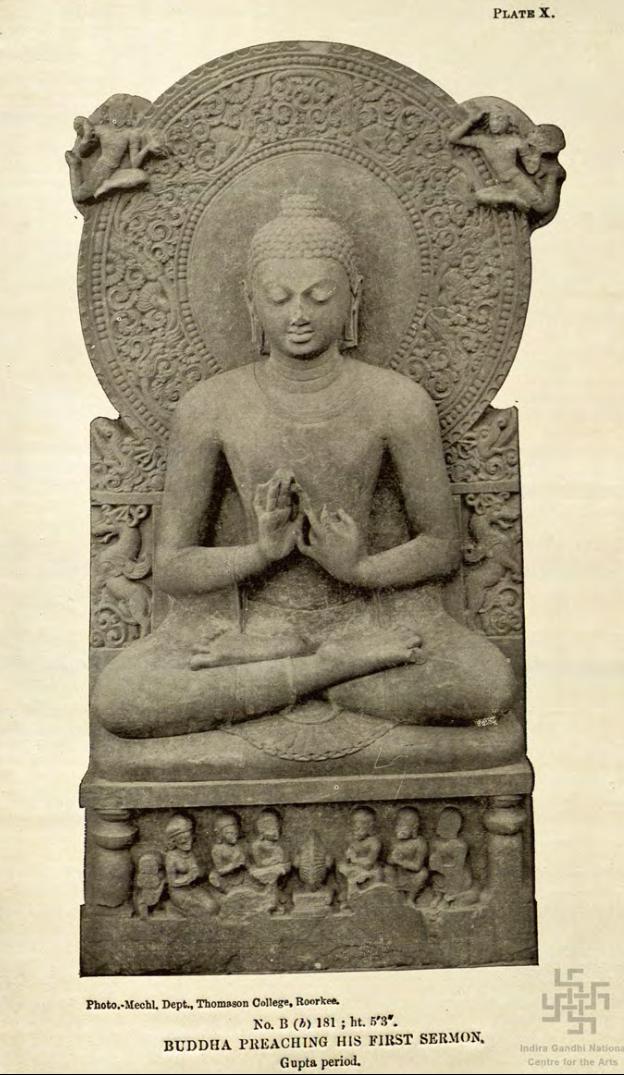
The first truth is the diagnosis: dukkha, a word wider than acute pain, includes aging and loss, the instability of pleasure, and the strain of asking a changing life to hold still. The second traces its arising to craving—the thirsty pull toward what is wanted, away from what is feared, or into a fixed identity. This does not make every illness, grief, violence, or injustice the sufferer’s fault. It identifies a particular grip through which suffering renews itself.
The third truth affirms cessation: the possibility that this renewal of suffering can end as craving releases its hold. The fourth turns that possibility into practice through the Noble Eightfold Path. Understanding and intention, speech and action, livelihood and effort, mindfulness and concentration train how a person sees, chooses, speaks, works, and attends. The movement runs from recognizing suffering to examining its conditions, glimpsing release, and giving that insight the shape of a life.
The early discourse often called Setting in Motion the Wheel of Dhamma preserves this fourfold movement, while later Buddhist schools interpret path and awakening in different ways. A Christian account may place suffering within relation to God, sin, mercy, and salvation; these truths work without a Creator-God frame, through craving, cessation, and disciplined practice.
Words used here
Plain meanings for words on this page.
Four Noble Truths
The Buddha’s first teaching, traditionally given at Sarnath: that suffering is real, that it arises with craving, that it can cease, and that a path of living and seeing can lead there. “Noble” here means a truth worth facing, not a rank of people.
A little deeper
Early Buddhist texts present these four as a diagnosis and a path, not as a creed to recite. Later schools interpret them in different ways; they remain a shared starting point rather than one identical doctrine across all Buddhism.
Noble Eightfold Path
The fourth of the Four Noble Truths: a way of living that joins understanding, intention, speech, action, livelihood, effort, mindfulness, and concentration. It is a training of how one sees and how one acts—not a ladder of secret ranks.
dukkha
A central Buddhist word, often translated as suffering, unsatisfactoriness, or stress. It names the friction of living in a world that keeps changing while the heart keeps asking for something stable to hold.
A little deeper
Dukkha is wider than intense pain. It can include ordinary restlessness, loss, aging, and the sense that even pleasant moments do not finally settle the heart.
craving
The hungry pull toward what we want, away from what we fear, or toward a fixed story of how life should be. In early Buddhist teaching this pull—called tanha, often translated as thirst—is closely linked to the renewal of suffering.
Featured connections
Where Four Noble Truths meets other voices
Four Noble TruthsSermon on the Mount
parallel
Two paths that begin near human suffering
Both join an account of human difficulty to practical formation: the Buddhist teaching sets out the Eightfold Path in response to dukkha and craving, while Matthew calls hearers into mercy, reconciliation, prayer, non-retaliation, and trust in God.
The Sermon on the Mount addresses people amid poverty, conflict, anxiety, and unequal power through blessing, righteousness, mercy, prayer, and trust in God. The Four Noble Truths identify dukkha, its arising through craving, its cessation, and the path. In their own categories, each moves from naming a human predicament to a way of life that can be practiced.
Where they differ
The Four Noble Truths diagnose craving and open a path toward cessation without a Creator-God frame, while the Sermon speaks of mercy, righteousness, and God’s reign within Jewish scripture and relation to God and neighbor.
Four Noble TruthsSiddhartha Gautama
historical relationship
The teaching remembered as first
In Buddhist tradition, the discourse at Sarnath marks the Buddha’s first teaching after awakening. It sets suffering, craving, cessation, and the path at the center of the work of liberation.
Four Noble TruthsSuffering
shared concept
Beginning by seeing dukkha clearly
The Four Noble Truths begin with dukkha: acute pain, aging, loss, the instability of pleasure, and the strain of seeking lasting security in changing experience. Naming this field of suffering is the first movement in a larger path that asks what sustains it and how release might become possible.
Continue from here
Open a related page.
Siddhartha Gautama
Person
Suffering
Idea
Craving
Idea
Buddhism
Tradition
Sources
What this reading rests on
Dhammacakkappavattana Sutta (SN 56.11)
primary text
The early discourse presents suffering, its arising with craving, its cessation, and the path, within the traditional setting of the Buddha’s first teaching at Sarnath.