Concept
Prayer
Addressing God—or what a tradition names as holy
A person may ask, thank, grieve, praise, or remain silent—and understand the whole act as being heard. Prayer is this turning toward God, or toward what a tradition holds holy, through words, posture, silence, or offering. It can happen alone or through a community moving as one. The photograph shows one such form, Islamic congregational prayer, called salat or namaz; it offers a doorway into prayer, not a picture of every way people pray.
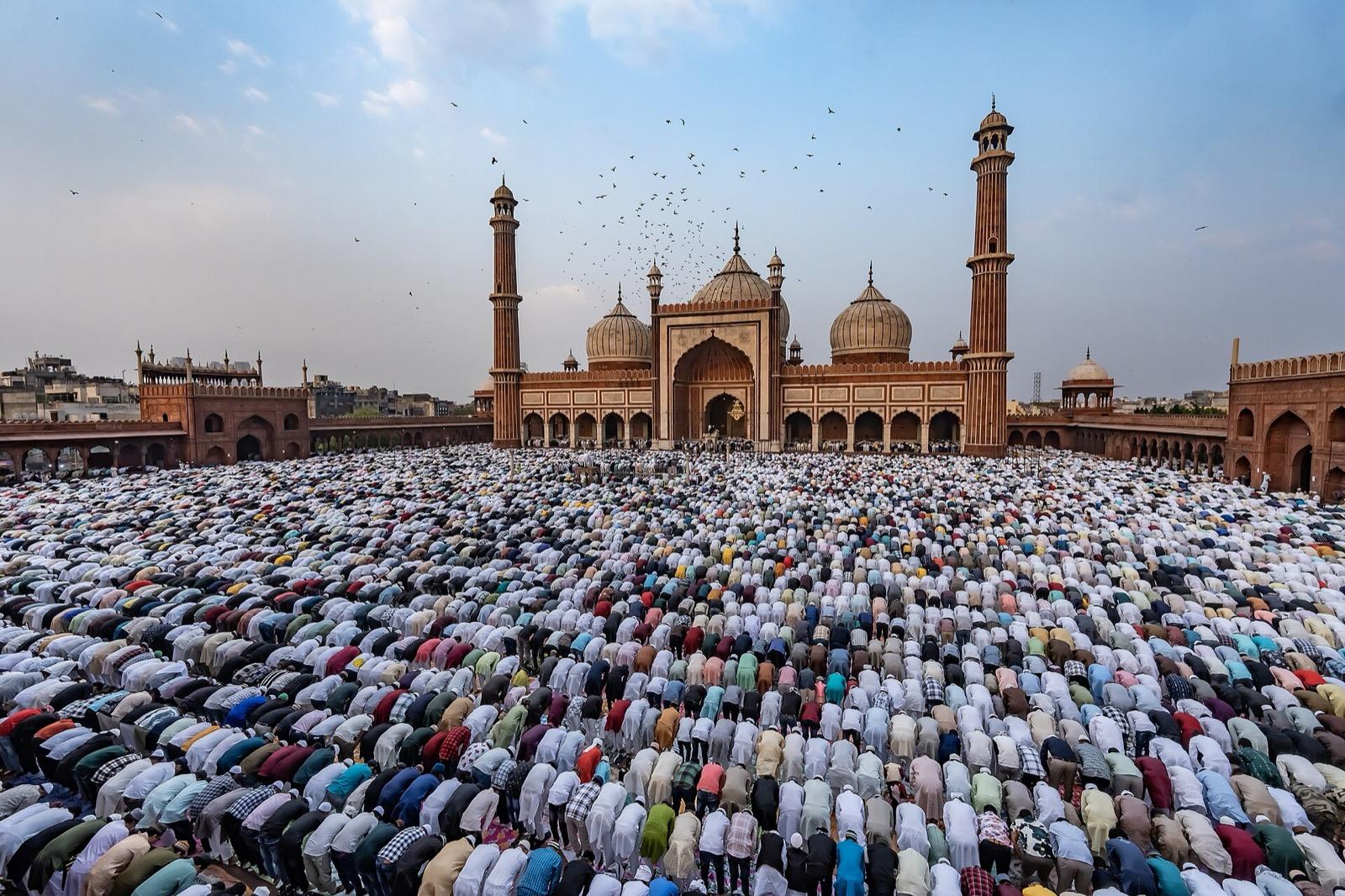
In the Sermon on the Mount, the Gospel of Matthew presents Jesus teaching the short address later called the Lord’s Prayer: a Father in heaven is asked for daily bread, forgiveness, and rescue from trial. In Islam, salat gathers time, direction, recited words, and bodily movement into worship of the one God; worshippers face Mecca, stand, bow, and prostrate, and may recite short Qur’anic chapters such as Al-Ikhlas. Sufi dhikr, or remembrance, repeats the names of God in a different register of nearness. Jewish traditions of prayer precede both Christianity and Islam and form part of the religious world from which Christian prayer emerged.
Across these forms, the strongest shared movement is relation. Prayer speaks, listens, offers, or waits before God or a holy other who can be addressed. Meditation can share silence, attention, breath, and posture, and later Christian contemplative prayer may become deeply still. Yet the stillness remains within a relation to God, while early Buddhist meditation investigates changing experience, craving, and not-self. Similar outward forms can therefore carry genuinely different understandings of what is happening.
Words used here
Plain meanings for words on this page.
prayer
Addressing the sacred: words, silence, posture, or offering directed toward God or what a tradition names as holy. Prayer is not automatically meditation, even when both still the body.
salat
The formal Islamic prayer: a sequence of standing, bowing, and prostration, with recited words, facing Mecca, at set times. It is worship of the one God, not a silent technique for watching thoughts.
creature and creator
Language many traditions use for the relation between finite beings and what they call God—the made and the Maker, the dependent and the source. Difference can remain real in this language even when love is close.
A little deeper
Christian theology often preserves a real distinction between creature and creator even when speaking of love, indwelling, or union. Advaita Vedanta offers a different account: the deepest Self and ultimate reality are not fundamentally separate. Both can question isolation, but they do not mean the same thing by union.
Featured connections
Where Prayer meets other voices
PrayerMeditation
contrast
Shared stillness, different attention
Some forms share stillness, posture, and the discipline of returning attention.
Prayer and meditation may look alike when silence, posture, and repeated return gather attention. That outward resemblance is the useful meeting point.
Where they differ
Prayer addresses God; early Buddhist insight meditation examines changing experience.
PrayerPractice
shared concept
Giving relation a daily form
Prayer turns belief into repeated address: words, silence, gesture, and posture place a person or community before God or what it holds holy. Repetition can deepen attention, gratitude, dependence, and responsibility; it can also preserve the outward form after the living relation has thinned.
Continue from here
Open a related page.
Meditation
Idea
Sermon on the Mount
Teaching
Islam
Tradition
Practice
Idea
Sources
What this reading rests on
Matthew 5–7 (Sermon on the Mount)
primary text
Matthew 6 presents Jesus teaching prayer as unperformed address to God, including the prayer later called the Lord’s Prayer.
Qur’an 112 (Surah al-Ikhlas)
primary text
Al-Ikhlas is a short Qur’anic confession of God’s oneness commonly carried into the repeated words of Islamic prayer.
Prayer – Encyclopaedia Britannica
encyclopedia
Secondary orientation for prayer as a widespread act of address, devotion, lament, thanks, and communal worship.