Teaching
Bhagavad Gita
The song of the Lord
The Bhagavad Gita is a Hindu philosophical and spiritual text presented as a dialogue between the warrior Arjuna and Krishna on the eve of battle. It sits inside the Mahabharata, a vast Sanskrit epic. Much of the conversation asks how a person can act fully without becoming trapped by fear, desire, or attachment to the outcome.
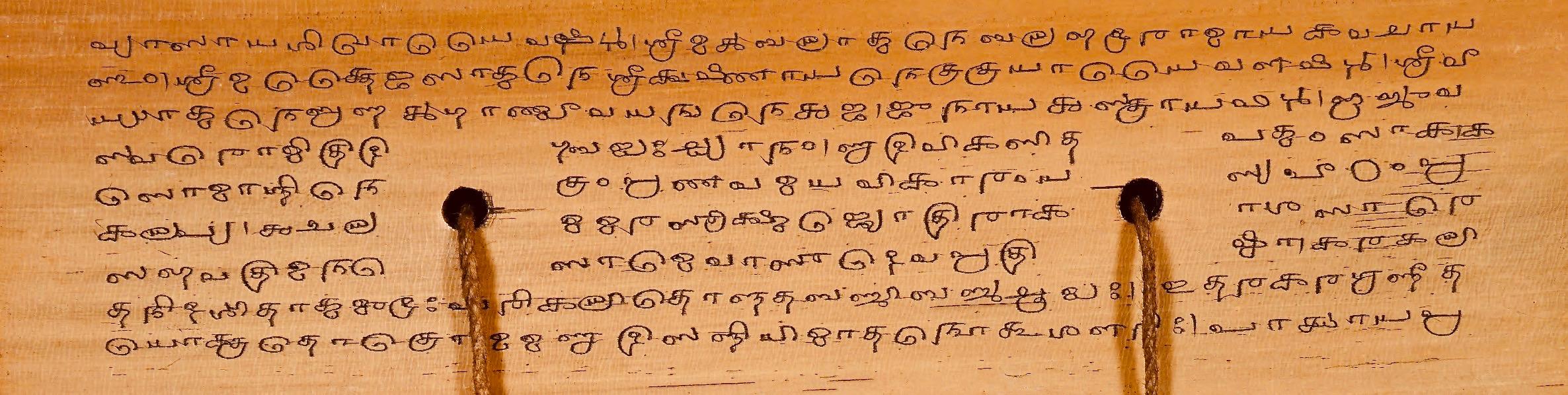
Arjuna looks at the armies and cannot lift his bow. Krishna’s reply is not a pep talk. In a common English rendering of chapter 2, verse 47, Arjuna is told that he has a claim to action, but not to the fruits of action—translations vary, but the hinge is clear: do what is yours to do, and do not let the result become a second self you must defend. The Gita calls this a yoga of action: discipline in the deed rather than hunger for the prize. Karma here is not a cartoon of payback. It is how clinging binds, and how unclinging action can be a path.
The same chapter speaks of a Self that is not born and does not die, not slain when the body is slain. That is a Hindu teaching of Atman—not the Buddhist analysis of not-self, even when both refuse to treat the ordinary body-story as the whole of what you are. The Gita also speaks of devotion to Krishna and of knowledge; later readers have emphasized different yogas. It is a teaching on how to live inside conflict, not a manual that erases conflict, and not a Christian sermon on enemy-love.
Words used here
Plain meanings for words on this page.
dharma
In Hindu settings, dharma often means the right order of things and the particular duty of a life—what is yours to do, given who you are and where you stand. It is not a generic slogan, and it is not identical with every use of the related Buddhist word dhamma.
karma
Intentional action and the way such action shapes what follows. In the Bhagavad Gita, the point is not cosmic revenge for a traffic slight. It is how clinging to results binds a person, and how action without that clinging can be a path.
A little deeper
Popular speech often treats karma as payback. Classical Hindu and Buddhist uses are more precise: they concern intention, consequence, and continuity across a life—and, in traditional teaching, across rebirth. Those are religious and philosophical claims, not laboratory measurements.
Atman
In many Hindu philosophical contexts, Atman names the deepest Self. In Advaita, this Self is understood as not separate from Brahman.
avatar
In Hindu theology, an avatar is a descent or incarnation of a god into the world. Many Hindus understand Krishna as an avatar of Vishnu. That is a traditional religious claim, not a historical proof that a god walked the earth.
Featured connections
Where Bhagavad Gita meets other voices
Bhagavad GitaKrishna
historical relationship
Krishna speaks into Arjuna’s crisis
The Bhagavad Gita takes the form of a conversation in which Arjuna’s refusal to fight opens into Krishna’s teaching on duty, disciplined action, Self, and devotion. Hindu tradition receives the words as Krishna’s teaching, while historical study approaches the work as a composed dialogue within the Mahabharata.
Bhagavad GitaSermon on the Mount
contrast
Two ways of acting when conflict closes in
Both trace outward action back to inward attachment and motive, asking for a life no longer governed by fear, reward, reputation, or retaliation.
The Gita and the Sermon on the Mount both ask what freedom from fear, status, and self-protection would look like in action. One speaks to a warrior unable to fight; the other presses love beyond friend and kin toward the enemy. Their proximity makes moral formation visible precisely where their counsel separates.
Where they differ
The Gita can require battle as Arjuna’s dharma within an epic crisis of kinship and order; Matthew’s Jesus resists retaliation, blesses peacemakers, and commands love of enemies before God.
Bhagavad GitaEthics
shared concept
Act fully without possessing the result
Arjuna’s paralysis makes ethics immediate: action is unavoidable, yet its outcome cannot be owned. The Gita’s answer joins dharma, the duty of one’s situation, to disciplined action without attachment to its fruit, asking how responsibility might remain when fear and self-interest no longer set the terms.
Continue from here
Open a related page.
Krishna
Person
Ethics
Idea
Rebirth
Idea
Hinduism
Tradition
Sources
What this reading rests on
Bhagavad Gita
primary text
Primary text for the Gita’s dialogue on Self, duty, action, devotion, and attachment to results.