Tradition
Advaita Vedanta
The line between “me” and everything else can feel like the most basic fact of experience. Advaita Vedanta, an influential school of Hindu philosophy, argues that this division is not reality at its deepest. Its central claim is that Atman, the deepest Self, and Brahman, ultimate reality, are not two separate things—hence the name Advaita, or “non-dual.”
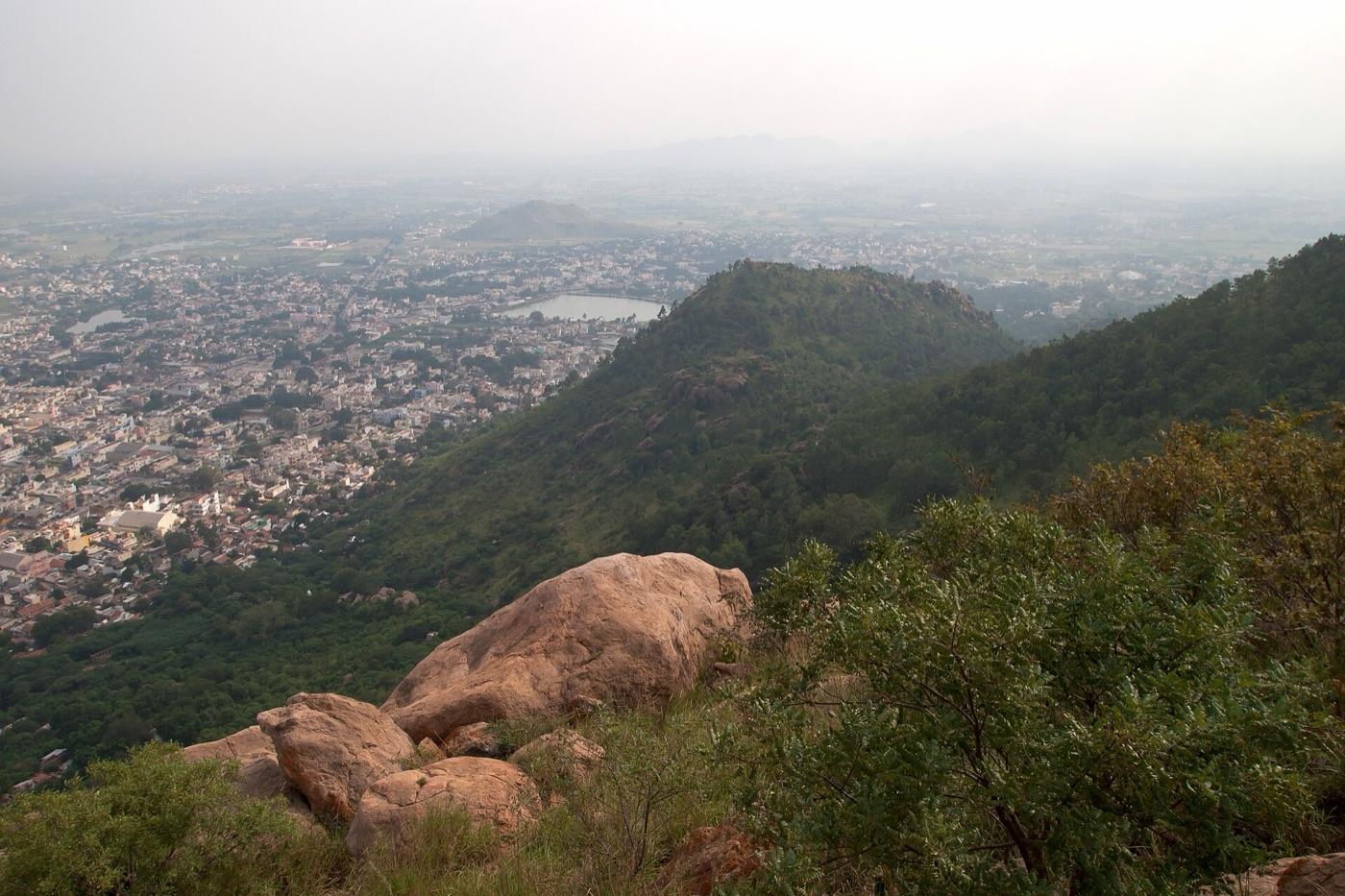
Advaita is one school within the much wider landscape of Hindu religion and philosophy, not a summary of Hinduism as a whole. Its roots reach into earlier Vedantic and Upanishadic inquiry, while its classical systematization is often associated with the eighth-century philosopher Shankara. Later teachers do not all sound alike: modern figures such as Ramana Maharshi and Nisargadatta Maharaj often bring the tradition's vocabulary into direct inquiry into the sense of “I,” rather than beginning with formal philosophical argument.
Advaita treats liberation as recognition: the separate identity ordinarily taken to be the whole person is not the deepest Self, and that Self was never apart from Brahman. This places it beside Buddhist not-self at the point where familiar identity becomes questionable. Their conclusions remain distinct, because Buddhism does not answer that inquiry by affirming Advaita's non-dual Self.
Words used here
Plain meanings for words on this page.
Advaita Vedanta
A school of Hindu philosophy that teaches that the deepest Self and ultimate reality are not fundamentally separate. This view is often called non-duality.
A little deeper
“Advaita” means “not two.” Vedanta refers to teachings associated with the later portion of the Vedic tradition, especially the Upanishads. Advaita does not deny ordinary experience; it asks what remains when the sense of separation is examined.
Brahman
In Advaita Vedanta and related Hindu traditions, Brahman names ultimate reality: not a separate object inside the universe, but the fundamental reality of which everything is an expression.
Atman
In many Hindu philosophical contexts, Atman names the deepest Self. In Advaita, this Self is understood as not separate from Brahman.
non-duality
The idea that the separation we normally experience between “me” and “everything else” is not the deepest level of reality.
Featured connections
Where Advaita Vedanta meets other voices
Advaita VedantaHinduism
historical relationship
One Hindu path into non-duality
Advaita shares the wider Hindu inheritance of Vedic and Upanishadic reflection, karma, liberation, and sustained inquiry into self and ultimate reality.
Advaita Vedanta grows within the Hindu world while drawing one question into unusual focus: whether the deepest Self and Brahman, ultimate reality, are truly separate. That inquiry belongs beside Hindu devotion, ritual, and other schools without speaking for them all.
Where they differ
The wider Hindu family includes devotional, ritual, and philosophical paths with different accounts of God, self, and liberation; Advaita gives liberating knowledge of non-dual Atman and Brahman a defining role.
Advaita VedantaAdi Shankara
historical relationship
The teacher who gave Advaita classical form
Advaita’s roots reach into earlier Upanishadic and Vedantic inquiry, yet Shankara gave the school a lasting argumentative and commentarial shape. Through works on the Upanishads, Bhagavad Gita, and Brahma Sutras, he made knowledge of the non-duality of Atman and Brahman central to a disciplined path of liberation.
Continue from here
Open a related page.
Adi Shankara
Person
Hinduism
Tradition
Ramana Maharshi
Person
Meister Eckhart
Person
Sources
What this reading rests on
Advaita Vedanta
encyclopedia
Scholarly orientation for Advaita's account of Atman, Brahman, non-duality, and its place within Vedanta.
Who Am I? (Nan Yar?)
original work
Primary modern text in which Ramana Maharshi directs inquiry toward the source of the “I”-thought.