Teaching
Dead Sea Scrolls
A Second Temple Jewish library
The Dead Sea Scrolls are a library, not a single book. Found in caves near Qumran beginning in 1947, the manuscripts bring together copies of books later included in the Hebrew Bible, prayers, calendars, rules for communal life, and Aramaic fragments of works now gathered as 1 Enoch. Their variety brings the Jewish world of the Second Temple period into view as a field of living argument about scripture, purity, time, community, and the approaching judgment of God.
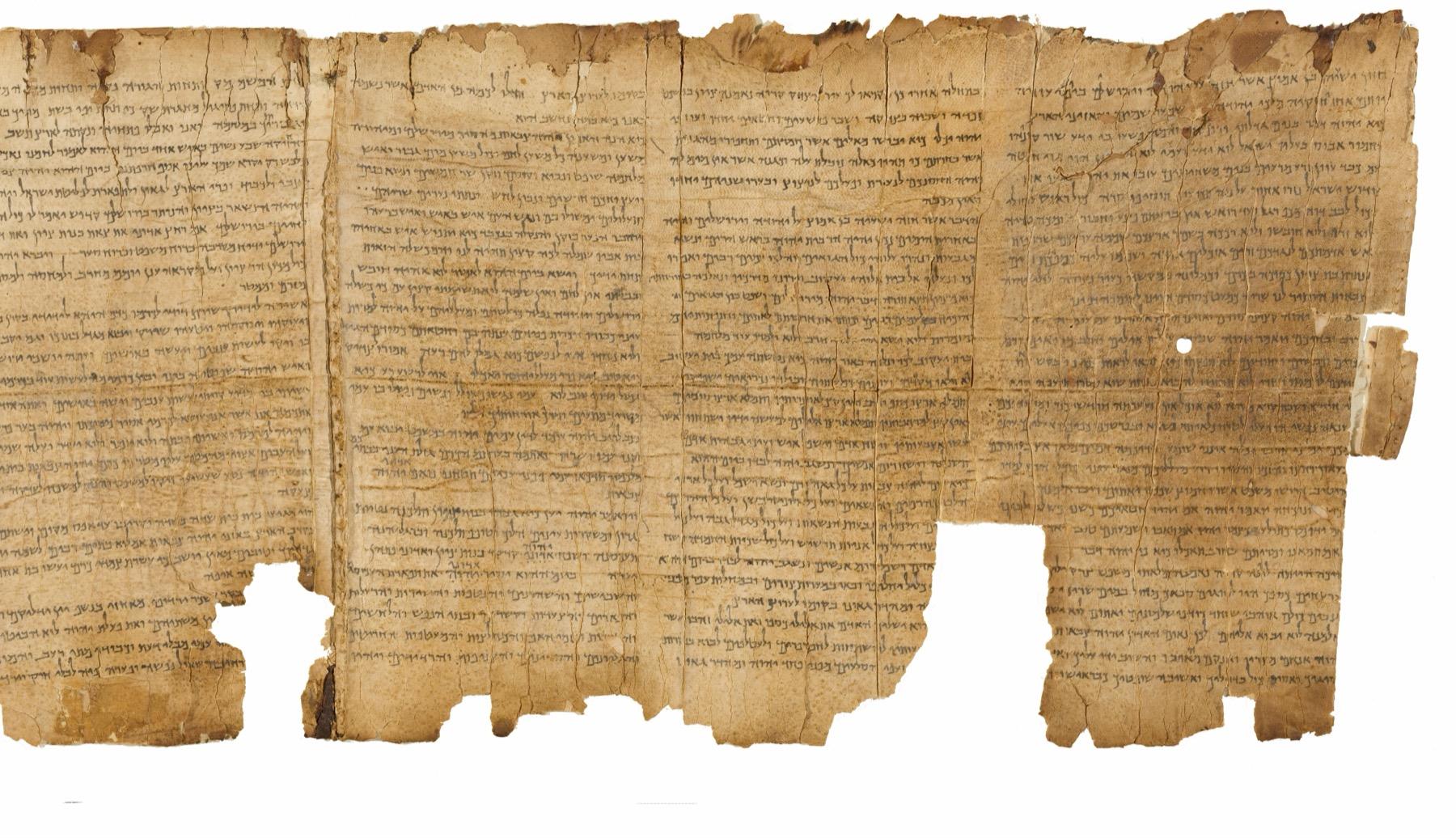
The Community Rule opens one especially vivid room in that library. It orders a Yahad—the community’s own term—through ranked membership, shared discipline, ritual purity, and a stark division between the lot of light and the lot of darkness. Other scrolls speak of a Teacher of Righteousness opposed by a Wicked Priest, while the Enochic fragments carry stories of Watchers and heavenly judgment into the same collection. These texts do not describe all Jews of the period. They reveal how many forms Jewish hope, law, and communal belonging could take within one historical world.
Most scholars identify the people associated with Qumran as Essenes, or as a group closely related to the sect described by the first-century writer Josephus. The fit is persuasive because both pictures emphasize disciplined communal life and purity, yet the manuscripts call their community the Yahad and never use the Greek name “Essene.” The identification is therefore a strong scholarly interpretation rather than the community’s explicit signature.
The Scrolls do not identify the Teacher of Righteousness with Jesus, place Jesus in the Yahad, or include the Gospel of Thomas. What they offer instead is a shared Second Temple landscape in which wilderness, purity, urgent expectation, and the demands of a faithful life were matters of living Jewish argument.
Words used here
Plain meanings for words on this page.
Dead Sea Scrolls
A library of ancient Jewish manuscripts found in caves near Qumran, by the Dead Sea, beginning in 1947. They include biblical books, community rules, prayers, and works such as parts of 1 Enoch. They are not a single secret gospel, and not the Gospel of Thomas.
Yahad
A Hebrew word used in some Dead Sea Scrolls for the community itself—often translated “unity” or “the Community.” It is a self-name in the texts, not the later Greek label “Essenes.”
Teacher of Righteousness
A figure named in some Dead Sea Scrolls as a leader of the community, set against a Wicked Priest. He is not identified with Jesus by mainstream scholarship. Popular equations are overlays.
Second Temple Judaism
Jewish life in the centuries after the Babylonian exile, when a rebuilt temple stood in Jerusalem, until that temple was destroyed by Rome in 70 CE. Jesus, the Pharisees, the Sadducees, and the community behind many Dead Sea Scrolls belong in this wide landscape—not in later rabbinic Judaism as if it were already the only form.
Featured connections
Where Dead Sea Scrolls meets other voices
Dead Sea ScrollsEssenes
possible connection
The Yahad and the Essenes
The Community Rule and Josephus both describe a demanding Jewish communal life shaped by purity practices, shared discipline, and clear boundaries of membership.
The disciplined community described in the Dead Sea Scrolls closely resembles the Essenes known through ancient writers: both organize life around shared practice, purity, and ordered belonging. Most scholars therefore identify the Qumran community with the Essenes or a related group, although the Scrolls call the community the Yahad and never use the name “Essene.”
Where they differ
Yahad is the community’s self-name in the Scrolls, while Essenes is the name used by outside Greek-language writers; the identification is a strong scholarly interpretation, not an explicit statement in the manuscripts.
Dead Sea ScrollsBook of Enoch
historical relationship
Enoch preserved at Qumran
Aramaic fragments of several parts of 1 Enoch were found among the Dead Sea Scrolls. Their presence places Enochic visions of the Watchers, judgment, and the ordered heavens within surviving Jewish literature of the Second Temple period, centuries before most later Christian decisions about canon.
Continue from here
Open a related page.
Essenes
Tradition
Judaism
Tradition
Book of Enoch
Teaching
Jesus of Nazareth
Person
Sources
What this reading rests on
Community Rule (1QS)
primary text
Primary evidence for the Yahad’s ranked communal life, purity discipline, and language of light and darkness.
Dead Sea Scrolls – Encyclopaedia Britannica
encyclopedia
Secondary orientation for the library’s discovery, contents, Second Temple setting, and debated relationship to the Essenes.
1 Enoch (Book of the Watchers and related sections)
primary text
The primary work represented by Aramaic fragments at Qumran, placing Enochic literature within the Scrolls’ Jewish library.