Person
Krishna
teacher in the Bhagavad Gita
Arjuna cannot lift his bow. On the eve of battle, the warrior sees kin and teachers among those he is expected to fight, and every available action carries loss. The Bhagavad Gita, a teaching dialogue within the vast Sanskrit epic called the Mahabharata, gives Krishna the role of friend, charioteer, and guide in this crisis. Many Hindus worship Krishna as an avatar of Vishnu—a descent of the divine into the world. That is the tradition’s theological claim; whether a single historical Krishna stands behind the stories remains debated.
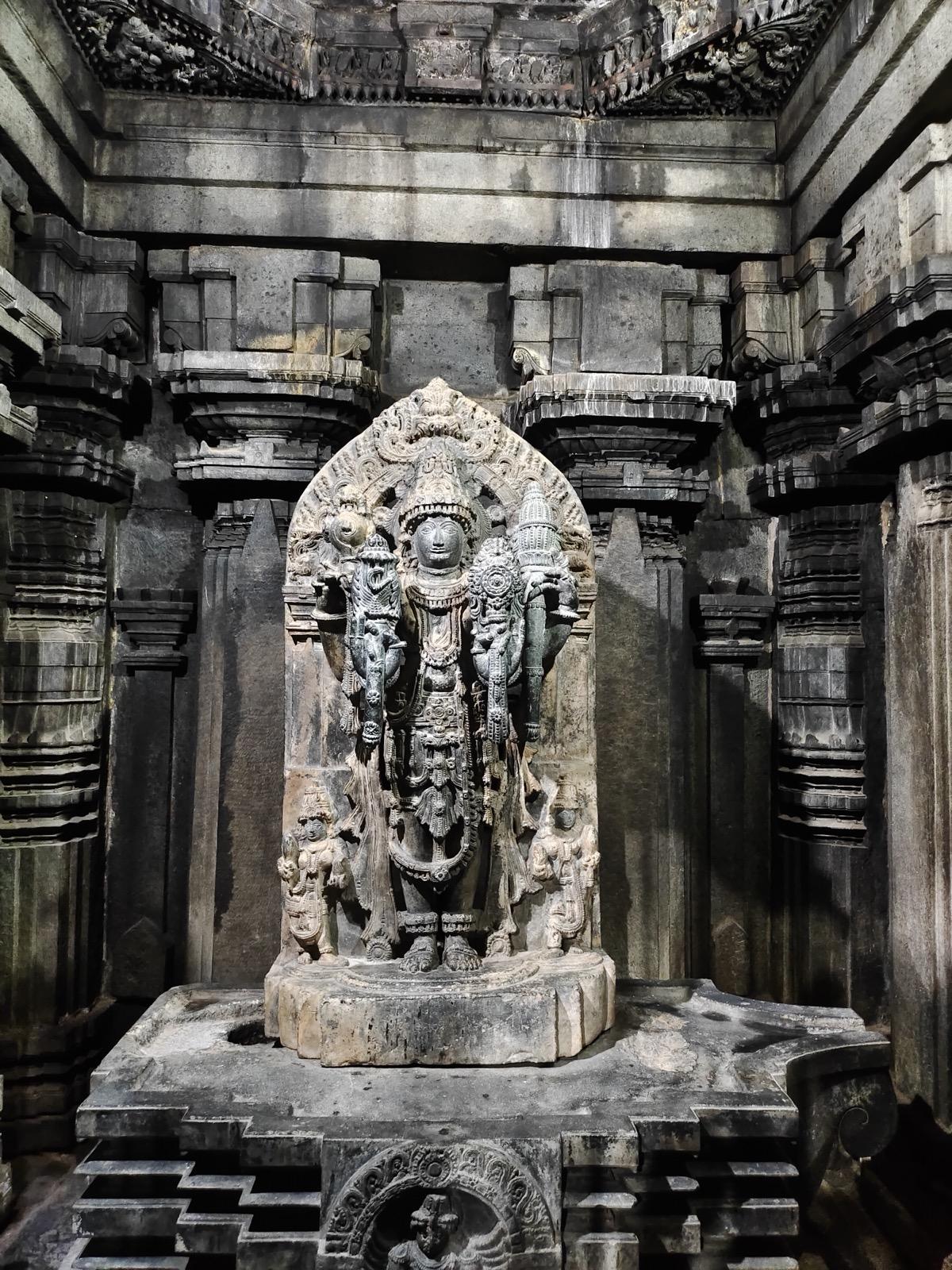
Arjuna’s crisis gives the teaching its pressure: the people he is expected to fight include kin and teachers. Krishna speaks of dharma, the duty that belongs to a particular life and situation; of karma, action and the consequences that bind when a person clings to results; and of Atman, the Self that the Gita says is not slain with the body. Action without attachment to its fruit does not mean doing nothing. It means giving full attention to the deed without making the outcome into something the self must possess.
That discipline creates a strong parallel with Epictetus, who also separates responsible action from results no one can wholly command. Their accounts of reality remain different: Stoicism speaks of virtue and reason, while the Gita joins duty to devotion to Krishna and an eternal Self. The Gita also parts company with Buddhist not-self and with the Sermon on the Mount’s enemy-love. The shared movement lies in loosening fear and outcome-hunger so action can answer to something larger than self-protection.
Words used here
Plain meanings for words on this page.
avatar
In Hindu theology, an avatar is a descent or incarnation of a god into the world. Many Hindus understand Krishna as an avatar of Vishnu. That is a traditional religious claim, not a historical proof that a god walked the earth.
dharma
In Hindu settings, dharma often means the right order of things and the particular duty of a life—what is yours to do, given who you are and where you stand. It is not a generic slogan, and it is not identical with every use of the related Buddhist word dhamma.
Atman
In many Hindu philosophical contexts, Atman names the deepest Self. In Advaita, this Self is understood as not separate from Brahman.
Featured connections
Where Krishna meets other voices
KrishnaBhagavad Gita
historical relationship
Krishna speaks into Arjuna’s crisis
The Bhagavad Gita takes the form of a conversation in which Arjuna’s refusal to fight opens into Krishna’s teaching on duty, disciplined action, Self, and devotion. Hindu tradition receives the words as Krishna’s teaching, while historical study approaches the work as a composed dialogue within the Mahabharata.
KrishnaJesus of Nazareth
parallel
Teaching inseparable from who the teacher is
Both stand at the center of communities in which remembered teaching, devotion, and claims of divine presence belong together.
For devotees of Krishna and for Christians, the teacher’s significance exceeds the wisdom of his words. The Gita’s counsel is bound to Krishna as Lord, while Christian reception of Jesus joins his teaching to confession about his divine identity. In both traditions, following the teaching becomes a relation to the teacher.
Where they differ
Krishna is understood through Hindu teachings of avatar and Vishnu, while Jesus is confessed within a Jewish-Christian story of incarnation, covenant, cross, and resurrection; their ethical settings also divide sharply over warrior duty and love of enemies.
Continue from here
Open a related page.
Bhagavad Gita
Teaching
Hinduism
Tradition
God
Idea
Jesus of Nazareth
Person
Sources
What this reading rests on
Bhagavad Gita
primary text
The primary dialogue presenting Krishna as Arjuna’s guide on dharma, action without attachment to results, and the enduring Self.
Hinduism – Encyclopaedia Britannica
encyclopedia
Secondary orientation for Krishna’s place within the wider diversity of Hindu traditions and devotion.