Person
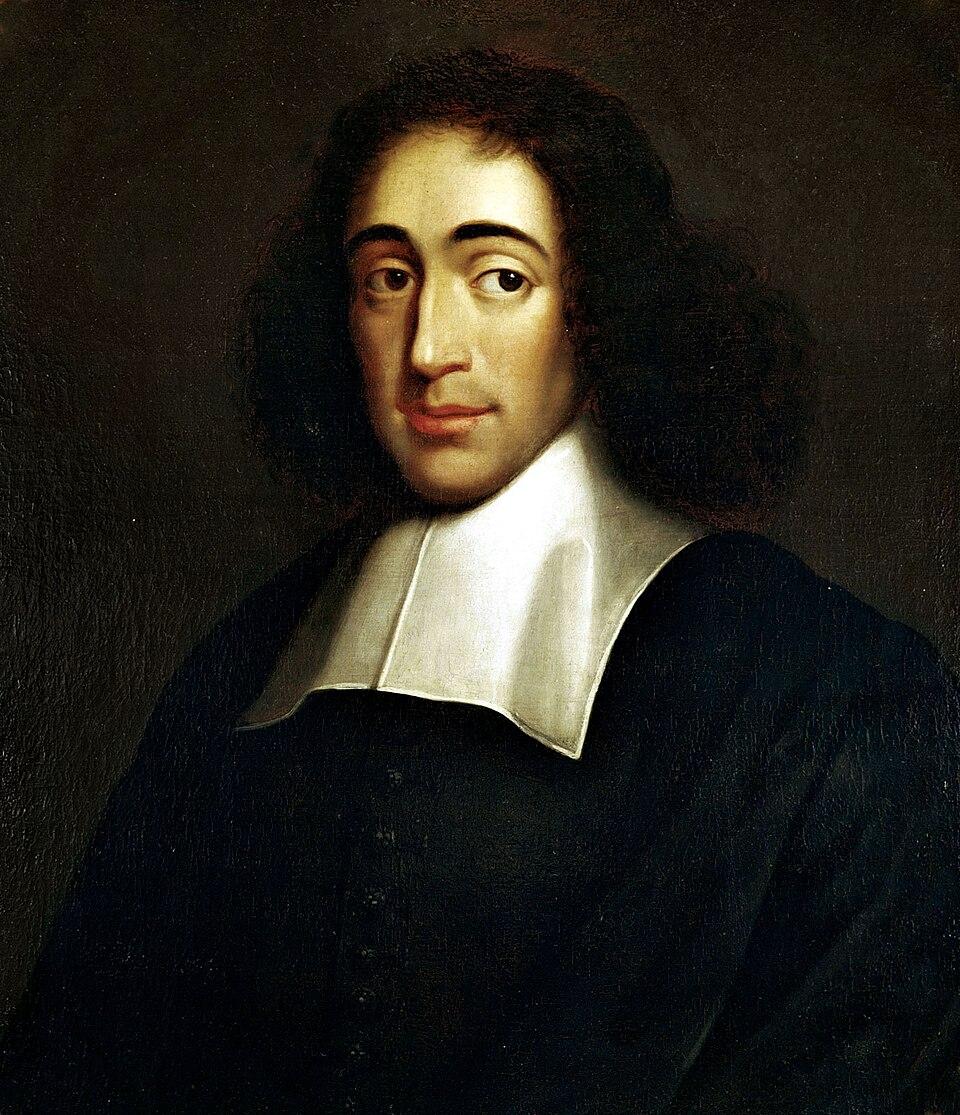
Baruch Spinoza
God, or Nature
Spinoza’s Ethics is written as a chain of definitions, propositions, and demonstrations. Through that geometric form, the Dutch Jewish philosopher Baruch Spinoza (1632–1677) argues that reality is one infinite substance, which he calls “God, or Nature.” Particular minds and bodies are finite expressions, or modes, of it.
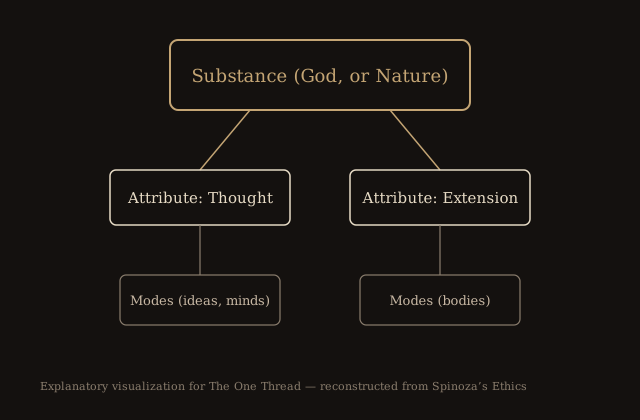
The argument moves through three linked ideas. Substance is what exists through itself. Attributes are ways that substance is understood; among them are Thought and Extension. Modes are the particular, finite expressions of those attributes. A mind and a body therefore do not stand as two independent substances. They belong to one reality understood through different attributes.
He lived first in Amsterdam and later elsewhere in the Netherlands. The Amsterdam Jewish community excommunicated him for views judged heretical, Christian authorities were also wary of his work, and later readers claimed him for very different causes. He is often called a pantheist, meaning a thinker who identifies God with the whole of reality. Some scholars accept the label, while others find it too broad for the exact argument of the Ethics.
This is why Deus sive Natura—God, or Nature—does not simply rename the biblical God as trees and rivers. Spinoza reaches God through rational argument about what exists, not through revelation, covenant, or devotional address. His use of the word still presses beyond a picture of reality made from separate things, but its substance, attributes, and modes belong to seventeenth-century philosophy.
Words used here
Plain meanings for words on this page.
pantheism
The view that God and the universe are, in some sense, identical—God as the whole rather than a separate creator standing outside the world. The label is often applied to Spinoza, though scholars debate whether it fits his actual teaching.
A little deeper
“Pan” means all; “theism” suggests God. Pantheism is one philosophical option among many. Christian creation theology, Advaita Brahman, and ordinary poetic language that calls nature “divine” sit nearby as neighbors.
Featured connections
Where Baruch Spinoza meets other voices
Baruch SpinozaDavid Bohm
parallel
Substance beside enfolded process
Apparent separateness is secondary to a more encompassing account in each system.
Spinoza asks what finite things are as modes of one substance; Bohm asks how apparent fragments may unfold from a deeper order. Their meeting point is dependence on a whole, reached through different kinds of argument.
Where they differ
Spinoza offers a metaphysics of substance and modes; Bohm proposes an implicate order as an interpretation of physics, not a consensus finding.
Baruch SpinozaPlotinus
contrast
Procession from the One, expression as modes
Neither begins with finite things as self-sufficient realities.
The comparison turns on two different structures of dependence. Plotinus traces an ordered procession from the One; Spinoza understands finite things as modes of one infinite substance.
Where they differ
Plotinus’s One remains beyond the procession of Intellect and Soul; Spinoza’s God or Nature is substance expressed through attributes and modes.
Continue from here
Open a related page.
God
Idea
Advaita Vedanta
Tradition
Meister Eckhart
Person
Sources
What this reading rests on
Ethics (Ethica ordine geometrico demonstrata)
original work
Primary source for God-or-Nature and the account of one substance expressed through attributes and finite modes.