Person
Epictetus
Epictetus begins with a division: some things are up to us, and others are not. Judgments, intentions, and choices belong to the first group; events, reputation, other people, and even the body cannot be fully commanded. His Stoic teaching locates freedom in giving our effort to character rather than demanding control over the world.
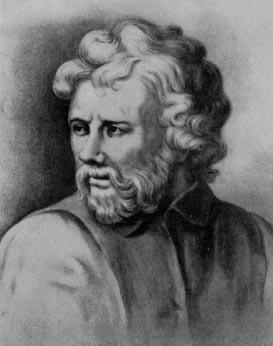
Stoicism is a Greco-Roman philosophy that treats virtue—wisdom, justice, courage, and moderation—as the good a person can cultivate. Epictetus, born enslaved in the first century CE, later taught in Rome and Nicopolis. His teaching survives chiefly through notes compiled by his student Arrian, including the Enchiridion, or Handbook. Its discipline is not the modern habit of calling emotional suppression “stoic.” The question is whether judgment can become wiser when pain and loss cannot simply be removed.
The Bhagavad Gita approaches a related pressure when it counsels action without clinging to its fruit. Both teachings loosen the demand that a good act must guarantee the desired result. Epictetus grounds that freedom in Stoic judgment and virtue; the Gita speaks of dharma, karma, devotion to Krishna, and an eternal Self. Compassion and mercy add another accent by asking how discipline turns toward another person’s suffering. Together they reveal a recurring movement from controlling events to forming the quality of one’s response.
Words used here
Plain meanings for words on this page.
Stoicism
A Greco-Roman philosophical tradition that asks how to live well by distinguishing what we can govern from what we cannot, and by cultivating virtue—character qualities such as wisdom, justice, courage, and moderation.
A little deeper
Ancient Stoics cared deeply about ethics, community, and inner alignment with reason and nature. Modern English “stoic” often means emotionless endurance; that popular sense is thinner than the school.
virtue
Excellence of character—the settled habits and qualities that make a human life good and worthy of respect. Different traditions name different virtues, but many agree that how we live matters as much as what we believe.
A little deeper
Virtue in Greek philosophy (arete) and in later Christian and Stoic teaching is a way of acting toward others and toward oneself over time—more than a private mood.
Featured connections
Where Epictetus meets other voices
EpictetusCompassion
parallel
When suffering cannot be controlled
Both make the quality of response morally serious: pain does not remove the need for care, judgment, or responsible action.
Another person’s pain can call for care even when the outcome cannot be repaired or guaranteed. Compassion asks us to stay with the sufferer; Epictetus asks us to govern judgment and action where control is possible. Together they sharpen the problem of acting well without pretending we command what follows.
Where they differ
Compassion centers another being’s suffering and the wish that it ease. Epictetus centers virtue, wise judgment, and the distinction between our choices and outcomes beyond our command.
EpictetusStoicism
historical relationship
A Stoic answer under pressure
What can a person still shape when reputation, illness, loss, and other people refuse to obey? Epictetus gives the wider Stoic tradition one of its clearest practical answers: judgment, intention, and character remain the proper field of moral effort.
EpictetusJesus of Nazareth
parallel
How should we answer what happens to us?
Both press beyond outward compliance toward the judgments, desires, and habits from which action grows.
Neither Jesus nor Epictetus promises control over circumstance. Both turn attention toward the response a person can embody when insult, loss, fear, or conflict arrives, but they locate the source and purpose of that response in different worlds.
Where they differ
Jesus speaks within Jewish life before God, calling for mercy and enemy-love; Epictetus grounds freedom in Stoic virtue and wise judgment about what lies within our control.
EpictetusEthics
shared concept
What is still yours to govern?
Ethical life becomes difficult when good intentions cannot guarantee good outcomes. Epictetus draws a firm line: events, reputation, and other people escape full control, while judgment, intention, and choice remain the place where character can be formed.
EpictetusBhagavad Gita
parallel
Freedom where outcomes escape control
Both loosen the demand that right action must secure the desired result, making inner discipline possible amid uncertainty, loss, and forces beyond one person’s command.
The Gita and Epictetus both move freedom away from guaranteed success and toward the quality of action itself. When events cannot be commanded, each asks what can still be given wholly: disciplined action in the Gita, and wise judgment and choice in Stoicism.
Where they differ
Epictetus grounds freedom in Stoic judgment, virtue, and life within a rational cosmos; the Gita grounds it in dharma, karma-yoga, devotion to Krishna, and an enduring Self.
Continue from here
Open a related page.
Stoicism
Tradition
Ethics
Idea
Sources
What this reading rests on
Enchiridion (Handbook of Epictetus)
original work
A primary, accessible source for Epictetus’ distinction between what is up to us and what is not, and for the freedom he locates in judgment and character.