Concept
Council of Nicaea
325 CE — creed, conflict, and empire
Read through
Optional. Marks sentences on this page only — it never rewrites the reading.
In 325 CE, bishops gathered at Nicaea, in what is now İznik, Turkey, because Christians were divided over how to speak about Jesus. Was the Son fully divine, sharing the Father’s being, or a created and lesser figure? Arius, a priest associated with the second position, stood at the center of the dispute. The Roman emperor Constantine called the meeting after Christianity had become legal, so theological argument and imperial concern for unity entered the same room.
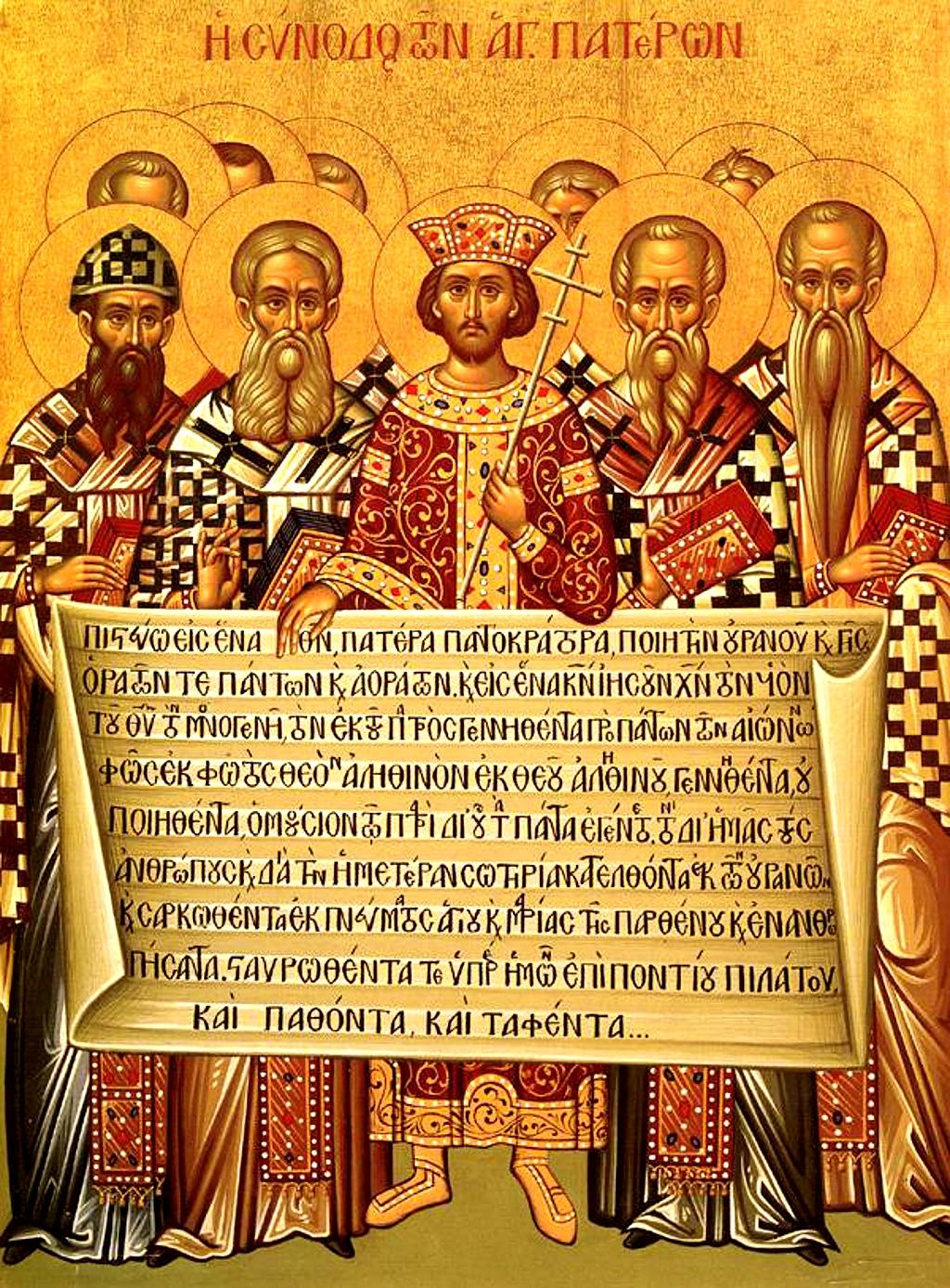
The council answered with a creed declaring the Son “begotten, not made” and of one being with the Father. The Greek word often remembered here is homoousios, “of the same being.” This was a precise claim about God, not merely a way of saying that Jesus mattered. The fuller creed recited by many churches today is associated with Constantinople in 381 and is related to, but not identical with, the text issued in 325. The later icon shown here places that fuller wording in the bishops’ hands. It is a devotional memory of the council, not a record made in the room.
Nicaea did not create the Bible. The council’s central work was the dispute about the Son, while the Christian canon took shape through a longer history of use, debate, lists, and later decisions. Constantine’s presence still matters: the emperor wanted religious unity within the empire, and bishops now had imperial power beside them as they argued. That does not reduce the creed to politics, nor does it show that a pure teaching of Jesus was buried in a single week. The council shows a community seeking language strong enough to hold a disputed teaching while new institutional power gave that language wider consequences.
A later comparison makes the disagreement especially clear. The Qur’anic chapter Al-Ikhlas says that God does not beget and is not begotten; Nicaea calls the Son begotten, not made, and of one being with the Father. Both use compact language to guard the oneness of God. They guard it through opposing claims.
Words used here
Plain meanings for words on this page.
creed
A short official statement of what a community requires people to believe. A creed can teach clearly. It can also draw a line: those who will not say it may no longer fully belong.
Trinity
The later Christian teaching that the one God is Father, Son, and Holy Spirit—not three gods, and not a simple count of one. The Council of Nicaea in 325 argued mainly about the Son’s relation to the Father; the fuller language of Trinity continued to develop after that meeting.
theology
The disciplined study and articulation of claims about God, the sacred, and ultimate reality within a religious tradition. Theology works from scripture, practice, and community. It does not hand you a single universal definition of “God.”
A little deeper
Theology and philosophy overlap, and they still do different jobs. A theologian may speak from within a tradition’s commitments; a philosopher may ask about first causes or being without accepting revelation. Both can use the word God and mean different things.
Featured connections
Where Council of Nicaea meets other voices
Council of NicaeaCreed
historical relationship
A council gives disputed belief a creed
At Nicaea, bishops answered a conflict over the Son’s relation to the Father by issuing a compact statement of belief. The creed preserved a theological judgment in words churches could teach and confess, while its anathemas also marked teachings the council rejected. Constantine’s summons gave this act of church office an imperial setting and wider consequences.
Council of NicaeaAl-Ikhlas
contrast
Oneness guarded by opposing claims
Each gives a community concise language for affirming one God and excluding a rival account.
Two compact confessions guard divine oneness by drawing the boundary around begetting in opposite places.
Where they differ
Nicaea includes the Son’s eternal begetting within the one God; Al-Ikhlas excludes divine begetting.
Continue from here
Open a related page.
Creed
Idea
Christianity
Tradition
Al-Ikhlas
Teaching
Jesus of Nazareth
Person
Sources
What this reading rests on
First Council of Nicaea – Encyclopaedia Britannica
encyclopedia
Historical orientation for the 325 meeting, the dispute associated with Arius, Constantine’s role, and the creed the council issued.
Nicene Creed (325, later expanded)
institutional
The 325 statement and its later liturgical form preserve the precise language about the Son while also showing that the two forms are not identical.