Tradition
Sufism
Within Islam, Sufism names paths of inward devotion shaped by the desire to draw near to God. Its schools, poets, teachers, and communities cultivate prayer, ethical refinement, and dhikr—the remembrance of God—often with a language of longing as intense as human love.
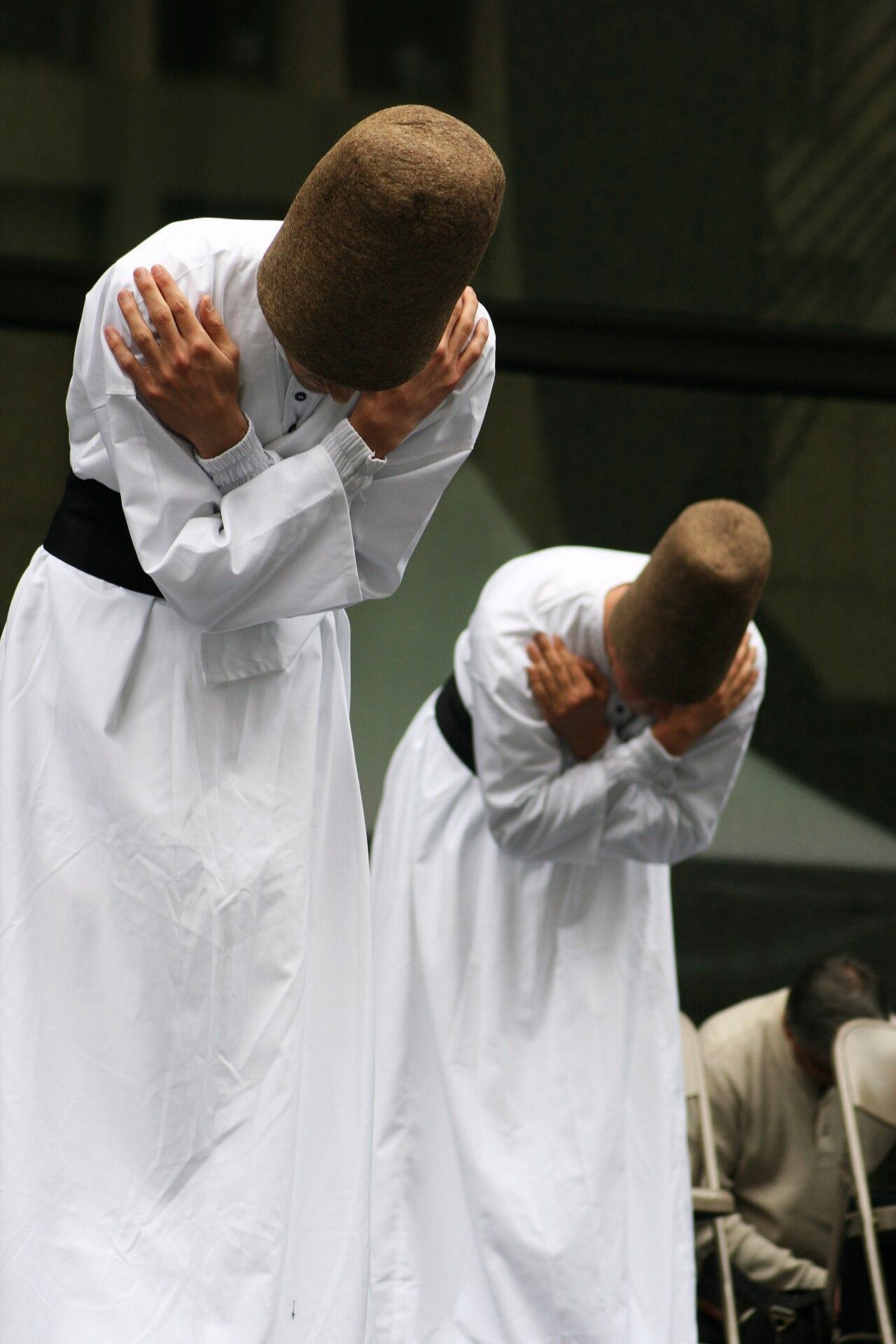
Sufism grew within Muslim life and formed its own bodies of literature, teaching lineages, devotional orders, and traditions of sainthood. Its practices are not uniform. Some communities remember God in silence or repeated words; the Mevlevi order is known for its turning ceremony; some teachers write careful theology, while poets speak in ecstatic images. Across many of these forms, worship becomes intimate: the God confessed in Islamic faith is also remembered, loved, and sought with the whole person.
Much Sufi poetry speaks of the soul as lover and God as the Beloved. The Arabic and Persian word ishq can carry this passionate longing, giving separation and reunion the force of lived spiritual experience. Rumi’s Masnavi is one celebrated expression of that language, not a summary of every Sufi school. Read within its Islamic home, its surrender and longing are directed toward God; translations that detach the poetry from that setting can make the Beloved sound like romance or a tradition-free spirituality. Language of nearness does not settle every question in the same way. Sufi schools have interpreted union, annihilation, and the distinction between God and the seeker differently.
Words used here
Plain meanings for words on this page.
Sufism
The mystical strand within Islam—schools, poets, and teachers who seek intimate nearness to God through prayer, remembrance, ethical refinement, and often intense devotion. Sufism grew inside Islam, with its own literature and practices.
ishq
An Arabic and Persian word for passionate love—often used in Sufi poetry for the soul's longing for the divine. It can include human love, but in Rumi and many Sufi writers it points toward God as the Beloved.
Featured connections
Where Sufism meets other voices
SufismIslam
historical relationship
Sufism within Islam
Sufi paths share Islam’s Qur’anic horizon, worship of the one God, prayer, moral accountability, and life within Muslim communities.
Sufism names a varied family of mystical paths within Islam. Through prayer, remembrance of God, ethical refinement, teaching lineages, and sometimes the language of lover and Beloved, it brings the worship of the one God into an intimate devotional register.
Where they differ
Islam includes legal, theological, and communal forms beyond Sufi orders, while Sufism gives particular weight to inward refinement and nearness to God; Sufi schools also differ in how they describe that nearness.
Continue from here
Open a related page.
Islam
Tradition
Jalal al-Din Rumi
Person
Love
Idea
Prayer
Idea
Sources
What this reading rests on
Masnavi-ye Ma'navi (Spiritual Couplets)
original work
A major primary literary witness to Sufi longing, surrender, and God as the Beloved; it represents Rumi’s poetic path rather than every Sufi school or practice.