Concept
Meditation
Trained attention—not automatically prayer
Sit still, and the mind does not necessarily become still with you. In early Buddhist meditation, that restless field becomes something to know: attention is trained toward body, feeling, mind, and the patterns of experience as they arise and pass. The Satipatthana Sutta, an early discourse on the foundations of mindfulness, describes this work. Its word sati is often translated as “mindfulness,” but here it belongs to a path of conduct and insight rather than to a smartphone category. The seated Buddha shown here is a later Gandharan sculpture, not a portrait of the historical teacher.
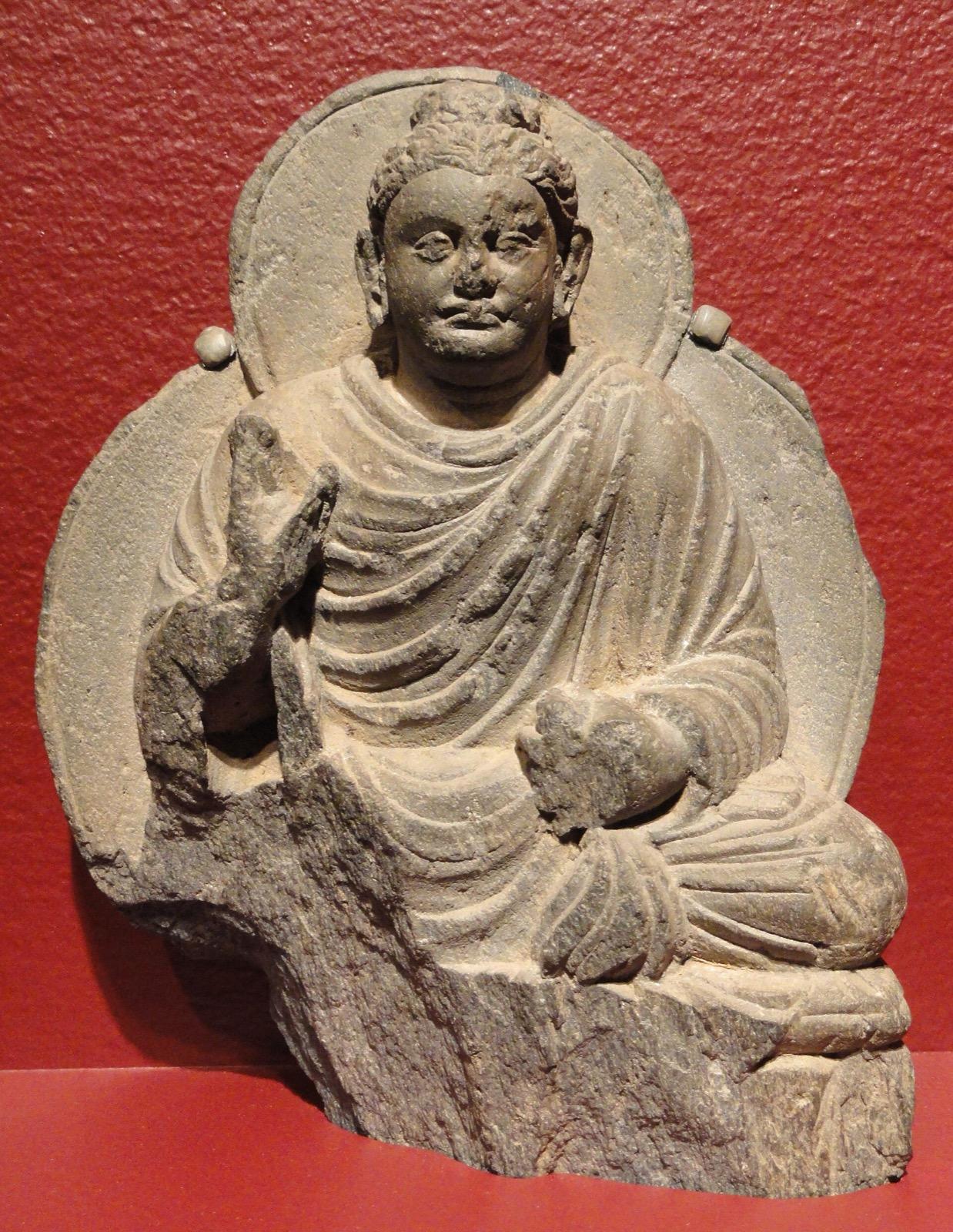
The English word now gathers many forms into one room. Hindu traditions speak of dhyana, collected attention within paths of yoga and knowledge. Christian contemplative prayer may quiet speech in the presence of God. Secular clinical programs may use attention to the breath to ease distress. What these forms share is a deliberate shift in attention, sometimes joined to a still body. What that attention serves is not shared: Buddhist insight is tied to seeing impermanence, loosening craving, and questioning a permanent self; Advaita-related meditation may serve recognition of the deepest Self; a clinic may seek relief from anxiety.
A repeated form can carry its teaching into the body, but it can also outlive it. Time on a cushion may become a badge while greed, fear, and comparison continue without examination. Krishnamurti’s distrust of method makes that danger visible. Early Buddhist sources answer it in their own way by placing mindfulness and concentration inside a larger path of conduct and understanding. Meditation, on that account, is neither a private performance nor a tool for making the existing self more efficient. It is one part of a life being trained to see differently.
Words used here
Plain meanings for words on this page.
meditation
A trained way of attending—to breath, to mind, to a phrase, or to what is happening now. In Buddhist settings it often means calming and insight. In modern English it can mean almost any quiet sitting. Those uses are not one technique.
A little deeper
Pali sati, often translated “mindfulness,” is a factor of the Buddhist path, not a generic wellness brand. Hindu dhyana, Christian contemplative prayer, and later secular programs share a family resemblance in stillness. They do not share one metaphysics.
awareness
The capacity to notice experience—thoughts, sensations, feelings, perceptions—without immediately becoming lost in them.
anatta
A Buddhist teaching usually translated as “not-self.” It asks whether any permanent, independent owner of experience can be found among the changing processes we ordinarily call “me.” It is not a claim that a person simply does not exist.
A little deeper
In the early discourse used here, body, feeling, perception, mental formations, and consciousness are examined as changing, vulnerable to suffering, and not fully subject to command. The listener is therefore taught not to hold any of them as mine, I, or self. Later Buddhist traditions develop this teaching in different ways.
Featured connections
Where Meditation meets other voices
MeditationPrayer
contrast
Shared stillness, different attention
Some forms share stillness, posture, and the discipline of returning attention.
Prayer and meditation may look alike when silence, posture, and repeated return gather attention. That outward resemblance is the useful meeting point.
Where they differ
Prayer addresses God; early Buddhist insight meditation examines changing experience.
MeditationPractice
shared concept
Training attention until seeing changes
Meditation gives attention a repeatable discipline. In the early Buddhist setting represented here, returning to body, feeling, mind, and patterns of experience is meant to disclose impermanence, craving, and the absence of a permanent owner—not merely to produce a calm interval.
MeditationBuddhism
historical relationship
Meditation inside the path of release
Buddhist meditation trains attention because suffering has causes that can be seen and loosened. Mindfulness and concentration belong with conduct and understanding, so attending to body and mind serves insight into impermanence, craving, and not-self rather than standing alone as a technique.
Continue from here
Open a related page.
Prayer
Idea
Buddhism
Tradition
Awareness
Idea
Practice
Idea
Sources
What this reading rests on
Satipatthana Sutta (Foundations of Mindfulness)
primary text
The primary early Buddhist discourse grounding mindfulness in attention to body, feeling, mind, and patterns of experience.
Dhammapada
primary text
Early Buddhist verses placing vigilance and the training of mind within a wider ethical path.
Meditation – Encyclopaedia Britannica
encyclopedia
Secondary orientation for the range of religious and secular practices gathered under the English word “meditation.”