Person
Zoroaster
Zarathustra — teacher of asha
The Gathas present truth as something a life can join. These oldest Zoroastrian hymns call that truth and right order asha, setting it against druj, the lie, in thought, speech, and action. Tradition attributes them to the Iranian teacher Zarathustra, known in Greek as Zoroaster, and the hymns address Ahura Mazda, the Wise Lord. His dates remain uncertain, with scholarly proposals spread across many centuries.
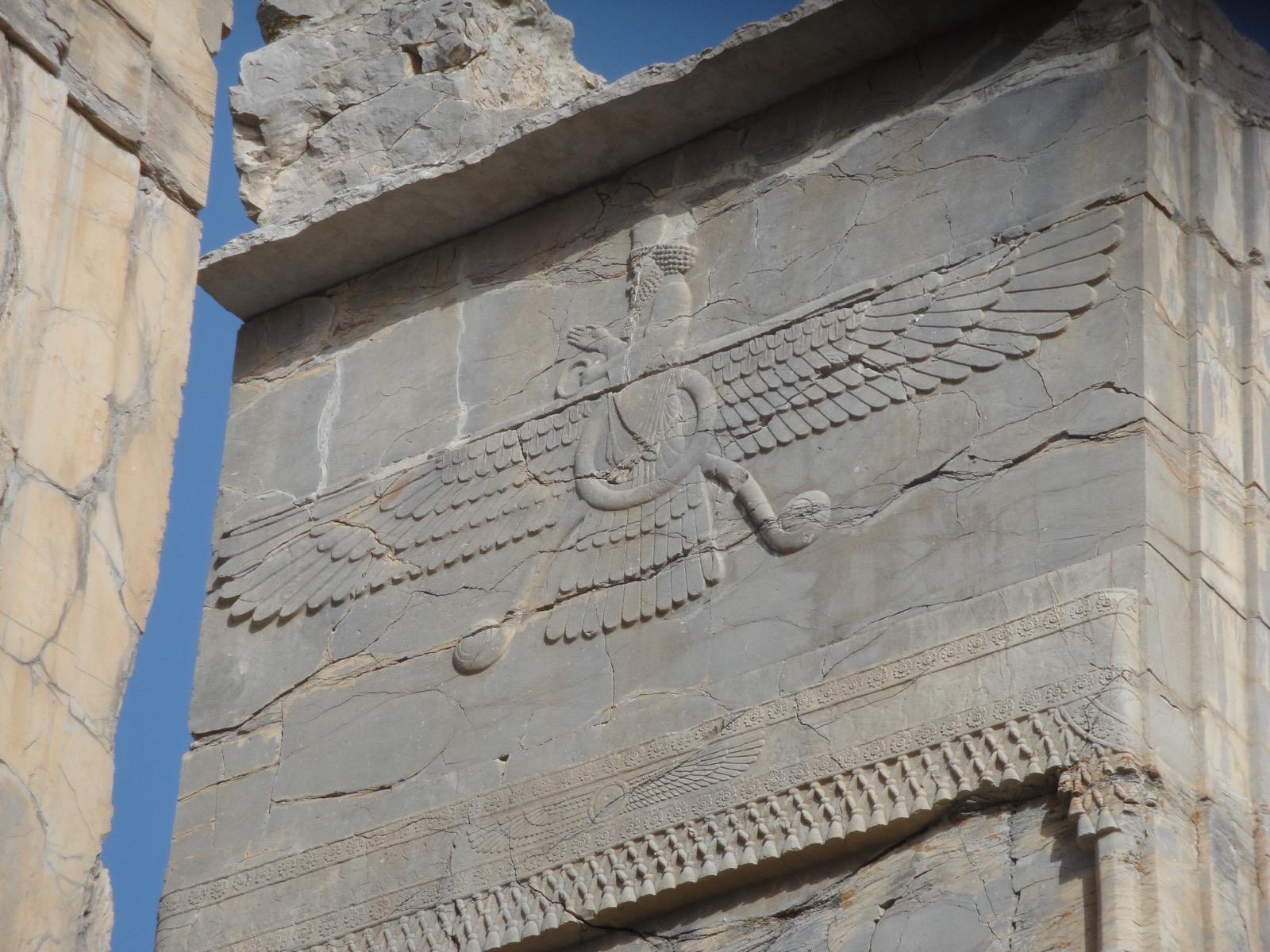
The Gathas present a choice between asha and druj, the lie, that runs through thought, speech, and action. Knowing truth is inseparable from taking its side. This joins moral conduct to a larger order associated with Ahura Mazda, giving Zoroaster’s teaching a movement found in other ethical paths: inner alignment and outward deed belong to one life. Fire in later Zoroastrian worship serves as a sign of light and purity, not as a rival god.
Later Zoroastrian texts develop fuller accounts of a hostile spirit, judgment, and a world restored; how much of that picture is already present in the Gathas remains a scholarly question. Possible influence on later Jewish ideas about angels, resurrection, and final judgment is also debated rather than established. Nietzsche’s nineteenth-century Thus Spoke Zarathustra belongs to a different history again: it borrows the teacher’s name for a modern literary prophet and is neither a translation nor an extension of the Gathas.
Words used here
Plain meanings for words on this page.
Zoroaster / Zarathustra
The same Iranian teacher under two names: Zarathustra in his own language, Zoroaster in Greek. He is remembered as the prophet of a religion that worships Ahura Mazda—the Wise Lord—and teaches asha, truth or right order. Dates for his life are uncertain. He is not the character in Nietzsche’s book Thus Spoke Zarathustra.
asha
In Zoroastrian teaching, asha is truth, rightness, and the order of things as they should be—opposed to the lie (druj). It is a moral and cosmic word at once: how the world is rightly aligned, and how a person should speak and act.
Ahura Mazda
The Wise Lord in Zoroastrian worship: the one God this tradition names as source of asha, light, and good mind. Later texts also speak of a hostile spirit and of the lie. How strictly dual that picture is—and how it relates to Jewish and Christian devil-language—is a matter of history and interpretation, not a settled equation.
Gathas
The oldest Zoroastrian hymns, in an ancient Iranian language, traditionally attributed to Zarathustra. They are poetry of worship and choice—not a modern biography, and not Nietzsche’s prose.
Featured connections
Where Zoroaster meets other voices
ZoroasterZoroastrianism
historical relationship
Prophet and living tradition
Zoroastrian tradition remembers Zarathustra as its prophet and receives the Gathas as its oldest hymns. Over centuries, communities developed ritual, theology, and ways of life around that inheritance, carrying it far beyond what can be known of one teacher’s biography.
ZoroasterAsha
shared concept
Choosing truth and right order
The Gathas place asha—truth, rightness, and the order associated with Ahura Mazda—against druj, the lie. Their moral struggle becomes concrete in the choice of thought, word, and deed.
ZoroasterFriedrich Nietzsche
contrast
An ancient name recast
Both the Gathic prophet and Nietzsche’s literary figure make moral orientation a matter of how an entire life is shaped.
Nietzsche deliberately gives the name Zarathustra to the literary teacher of Thus Spoke Zarathustra. The historical Zarathustra is remembered through the Gathas as a prophet of Ahura Mazda and asha; Nietzsche recasts the name for a modern critique of inherited morality after the death of God.
Where they differ
The Gathas call hearers toward Ahura Mazda, asha, and resistance to the lie. Thus Spoke Zarathustra is nineteenth-century philosophical literature that uses the ancient name to challenge inherited values, not to continue Zoroastrian teaching.
Continue from here
Open a related page.
Asha
Idea
Zoroastrianism
Tradition
God
Idea
Sources
What this reading rests on
The Gathas (Avesta)
primary text
The oldest Zoroastrian hymns, traditionally attributed to Zarathustra, for asha, the lie, human choice, and worship of Ahura Mazda.
Zoroaster – Encyclopaedia Britannica
encyclopedia
Secondary orientation for Zoroaster as a religious figure and for the wide scholarly uncertainty surrounding his dates.