Person
Ezekiel
A prophet who saw glory in exile
Read through
Optional. Marks sentences on this page only — it never rewrites the reading.
Ezekiel’s book begins far from home, among people living through the Babylonian exile. There the sixth-century BCE Hebrew prophet sees fire, living creatures, wheels within wheels, and a vision of divine glory that leaves him on the ground. A voice then sends him to speak whether or not anyone listens. His call brings the question of revelation into sharp focus: what does it mean to say that knowledge arrived as an overwhelming vision?
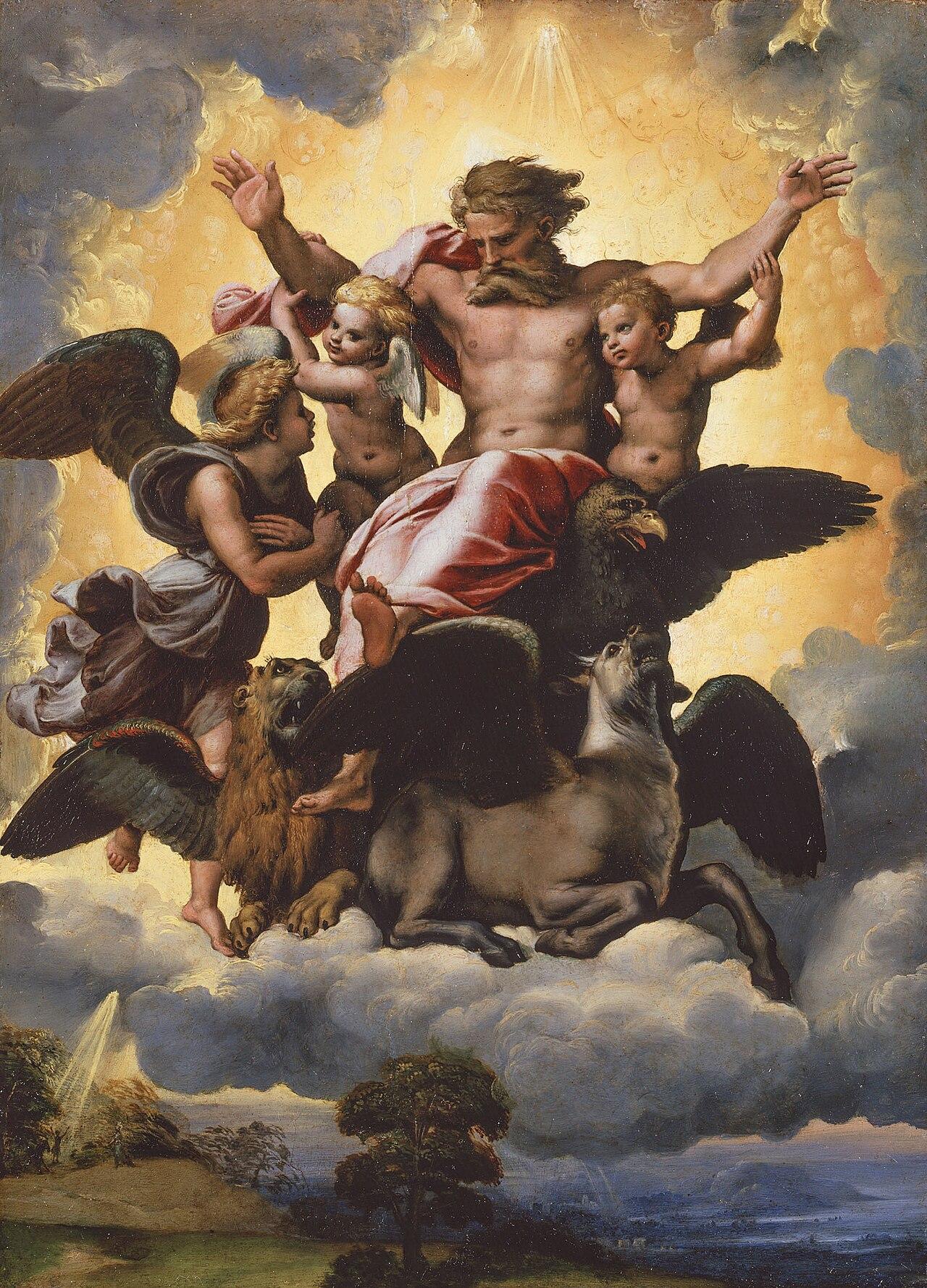
The strange imagery is not scenery around Ezekiel’s message; it is the form in which the message arrives. Traditional Jewish and Christian theology receives chapter 1 as an encounter with divine glory: the prophet is overwhelmed and falls. The commission follows in chapter 2, where the voice sends him to speak. Knowledge here is not reached by argument or experiment. It is described as something shown, heard, and entrusted to a human voice.
The setting makes that vision matter. Exile had broken familiar relations between land, temple, and communal life. Literary and historical readers can therefore attend to a prophetic imagination speaking judgment and hope when ordinary maps no longer hold. Psychological readers may ask how catastrophic loss takes symbolic form. These approaches do not erase the religious claim of revelation; they show why the same vision can carry several kinds of meaning.
Popular speculation sometimes treats ancient visionary texts as evidence of extraterrestrial technology. Ezekiel’s wheels and living creatures have made his book a frequent home for that later reading. The older text, however, presents a prophet encountering divine glory in exile and being sent back toward his people. That sequence—vision, collapse, commission—is the deeper pattern: what Ezekiel sees matters because it becomes a responsibility to speak.
Words used here
Plain meanings for words on this page.
prophet
In Jewish, Christian, and Islamic settings, a prophet is a figure who speaks for God—or who bears a message that interrupts ordinary political and religious assumptions. Prophecy can include vision, poetry, warning, law, and hope.
A little deeper
“Prophet” in academic reading can also name a literary role within scripture. Strange vision can be read as history, as genre, as inner image, or as modern speculation—the text itself does not decide which reading you must take.
revelation
Knowledge a religious tradition understands as disclosed or given rather than reached by human reasoning alone—for example through divine speech, scripture, prophecy, vision, or inner illumination.
A little deeper
A claimed revelation is received and interpreted within a community: texts are preserved, visions are tested, and meanings are argued. Reason, tradition, and experience may all take part, while communities continue to disagree about what counts as revelation and what authority it carries.
Featured connections
Where Ezekiel meets other voices
EzekielEnoch
parallel
Vision that becomes a commission
Each presents hidden order through fire, heavenly beings, and a seer who receives knowledge and is charged to carry a message.
Ezekiel and the Enoch of 1 Enoch both encounter an ordered heavenly world through overwhelming vision. In each account, seeing leads to responsibility: Ezekiel is sent to speak to Israel in exile, while Enoch carries judgment to the Watchers.
Where they differ
Ezekiel’s vision belongs to a prophetic book in the Hebrew Bible and addresses a people in exile. 1 Enoch is a later work written in an ancestor’s name, received as scripture in Ethiopian Orthodoxy but outside most other canons.
Continue from here
Open a related page.
Reason
Idea
Revelation
Idea
Enoch
Person
Sources
What this reading rests on
Ezekiel 1 (vision of the divine chariot)
primary text
The primary account of Ezekiel’s inaugural vision of divine glory and his collapse before it.